- The Problem with Endless Scrolling on Ecommerce Sites :
- What Makes Endless Scrolling a Sales Killer?
- What is AI Chatbot Product Curation?
- How Chatbots Curate the Perfect Product Collections ?
- AI Chatbot Curation Strategies for Different Ecommerce Categories :
- The Role of Chatbots in Improving User Experience :
- How Businesses Benefit from Chatbot-Curated Collections :
- How Botbuz Curates Collections in Real-Time Using Conversation Context?
- FAQs :
The Problem with Endless Scrolling on Ecommerce Sites :
The central challenge in modern online shopping is the sheer volume of products. It leads to the frustration of endless scrolling and a mental overload known as the paradox of choice. Customers often get overwhelmed. It makes it difficult to find the perfect item, which results in high rates of cart abandonment.
To overcome this, e-commerce is shifting toward personalized shopping experiences. It helps to mimic helpful human interaction. The solution lies in conversational commerce, where AI-powered chatbots step in to replace static forms and filters. These chatbots engage customers in natural dialogue. It quickly understands their specific & nuanced needs. Also it immediately narrows the entire catalog down to a handful of relevant choices. Thus, converting frustration into a confident purchase.
What Makes Endless Scrolling a Sales Killer?
The first issue is decision fatigue. When shoppers are forced to scroll through & compare countless products, their mental energy is quickly exhausted. This leads to analysis paralysis. They give up on finding the “best” product and simply abandon the site altogether.
Next, the poor user experience contributes to high bounce rates. Scrolling indefinitely makes the site feel disorienting and often hides useful navigation tools. Frustrated shoppers, unable to quickly orient themselves. They simply leave the website, resulting in fewer overall conversion chances.
Finally, there’s a gap between what the user intends and what the website can deliver. Traditional search and filtering can’t understand nuanced requests (like “a comfy shoe for work”). Endless scrolling forces the user to manually sort through thousands of irrelevant matches. It is because the system fails to efficiently guide them to the right product.
What is AI Chatbot Product Curation?
AI Chatbot Product Curation is the process. It is where a smart AI assistant selects & organizes a small, highly relevant group of products for a shopper based on their conversation. It moves product discovery from general browsing to a personalized dialogue.
The curation means the AI goes beyond just displaying products. Using cues from the chat, it custom-builds a collection. It precisely matches the shopper’s current needs. For e.g., “a comfortable, cheap chair for my small office”, providing context and relevance.
Chatbots function as digital personal shoppers. It understands the nuance of a customer’s language. They ask clarifying questions—just like a human would—to gather details & instantly filter the entire inventory. This makes the customer feel understood & speeds up decision-making.
This is a key contrast with traditional, static product listings. Static pages show long, general lists, forcing the user to filter manually. Conversational curation is dynamic and real-time. It presents a focused & tailored selection. Thus, increasing the chance of a successful sale.
How Chatbots Curate the Perfect Product Collections ?
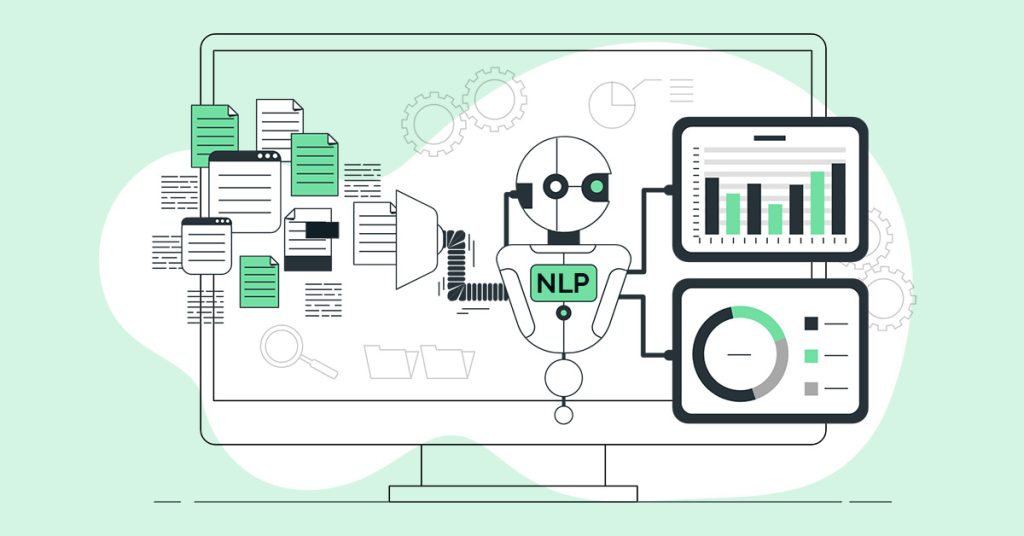
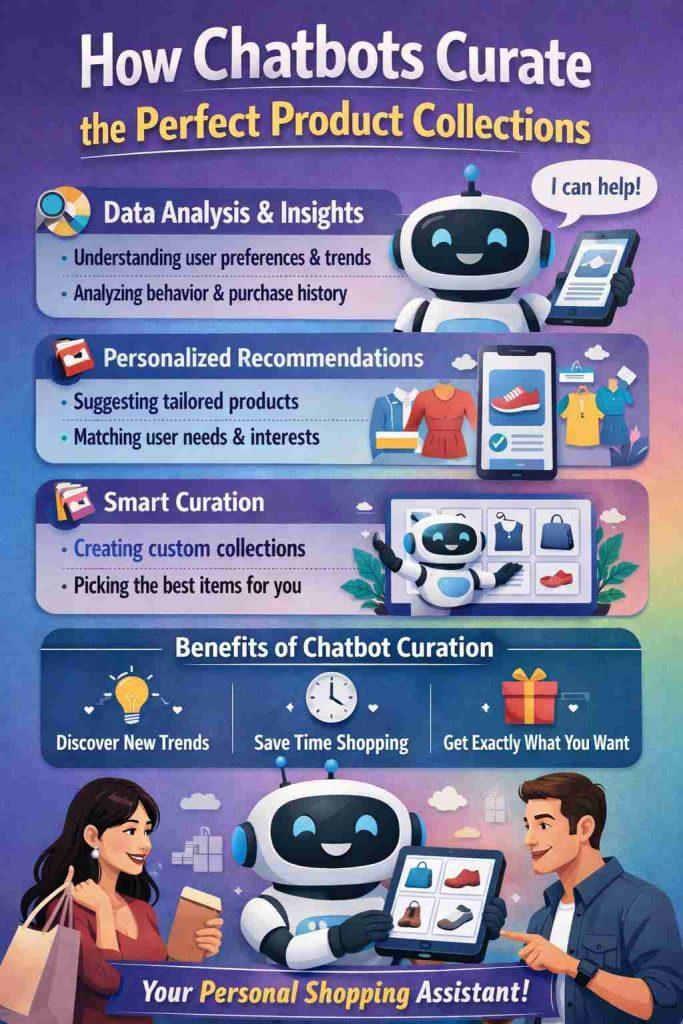
AI chatbots curate products by first understanding the user’s intent far beyond simple keywords. They use Natural Language Processing to read complex preferences, like style and constraints. Also it combine this with existing user data like browsing history for deep personalization.
The conversation then generates smart, dynamic filters. As the user interacts or answers questions, the chatbot instantly refines the search parameters. It shows only the most relevant products. Thus, effectively eliminating distracting noise and irrelevant options.
Underpinning this is AI-driven personalization. Machine Learning models analyze successful past purchases across all customers. It helps to predict what the current user will need next. This allows the chatbot to proactively suggest compatible or popular items, sometimes even before the customer thinks to ask.
The final result is the presentation of “handpicked” collections. The chatbot groups products based on real-time context. It includes budget, season, or current trends—making the entire shopping experience feel highly personalized. Thus, making the purchase decision much easier for the customer.
AI Chatbot Curation Strategies for Different Ecommerce Categories :
The strength of AI chatbot curation lies in its ability to adapt to different retail categories. Each requires a unique approach.
For Fashion, chatbots create style-based lookbooks and outfits based on a specific mood (like “date night”), curating complementary products to reduce decision-making fatigue.
In Electronics, the focus is on expertise. Chatbots build need-based bundles like a “content creator kit”. It provides feature-led comparisons to simplify complex technical decisions for the customer.
In Beauty, curation is based on trust & regimen. Chatbots analyze specific skin types to build multi-step routines. It offers expert-style advice, ensuring products are biologically appropriate for the user’s needs.
For Home & Decor, the AI focuses on aesthetics & inspiration. It curates complete room-specific sets and theme-based recommendations. Thus, ensuring all items complement each other.
Finally, in Grocery & Essentials, the goal is convenience. Chatbots facilitate smart replenishment based on purchase history and create dietary-specific collections. It helps to simplify regular, health-conscious shopping.
The Role of Chatbots in Improving User Experience :
Chatbots significantly improve the user experience primarily by enabling faster product finding. Instead of wasting time manually navigating endless options, a customer can state a complex need conversationally. It immediately receives a perfect, targeted recommendation in seconds.
Next, chatbots drastically reduce the cognitive load on the shopper. It handles the complex work of processing the vast inventory and providing only a handful of relevant choices. The AI shifts the customer’s task from exhausting searching to effortless selecting.
The result is a more satisfying & interactive shopping journey. Using natural language feels more intuitive and human than clicking rigid filters. When a customer feels guided and understood, it builds confidence, loyalty, and a positive association with the brand.

How Businesses Benefit from Chatbot-Curated Collections :
Businesses gain significantly from chatbot curation by achieving higher conversions. By simplifying the shopping process & offering only a few perfect options, chatbots remove the indecision caused by too much choice. This boosted confidence ensures more customers complete their purchase.
The technology also leads to an increased average order value (AOV). Chatbots excel at contextual upselling and cross-selling. It creates smart, relevant product bundles like a camera with the right accessories. It is on the basis of the customer’s stated needs, which encourages them to spend more.
Finally, the highly personalized service leads to better customer retention. A memorable, friction-free shopping experience builds strong customer loyalty. Additionally, the chatbot collects valuable data on preferences. It is used to inform future marketing & deepen the long-term customer relationship.

How Botbuz Curates Collections in Real-Time Using Conversation Context?
The effectiveness of a system like Botbuz comes from its ability to maintain a conversation, not just answer single questions. Its advanced NLP engine instantly understands the user’s specific intent. It extracts all necessary product attributes (e.g., color, size, purpose) in real-time.
Crucially, Botbuz uses context retention to remember the entire dialogue. If a customer revises their request (“Now show me something cheaper”), the bot layers the new constraint onto the existing context. It prevents frustrating restarts and ensures a natural, flowing conversation.
This process allows for dynamic product mapping. It instantly links the conversation to the catalog. The ultimate goal is to create hyper-personalized micro-collections. It is a small, highly relevant set of 3 to 5 products. Also it effectively eliminates decision fatigue & guides the customer straight to the final purchase decision.
Conclusion :
The era of simple endless scrolling is ending. It is replaced by the efficiency of conversational commerce. This is driven by AI Chatbot Product Curation.
Specific systems like Botbuz use advanced technology. It helps to understand complex user intent, retaining conversational context to map preferences to the product catalog instantly. This results in hyper-personalized micro-collections, ending decision paralysis.
The result is a major win-win. The customers enjoy a faster, less stressful, and more satisfying experience. While businesses achieve higher conversions, increased AOV, and better customer retention. The chatbot is therefore positioned as the key future engine for e-commerce sales & merchandising.
FAQs :
- What exactly is AI Chatbot Product Curation?
A: It is the process of using an AI-powered conversational assistant to intelligently select, organize, and present a small, highly-relevant collection of products from a vast e-commerce inventory. It moves product discovery from being a broad, self-guided search (endless scrolling) to a focused, human-like consultation.
- How does a chatbot like Botbuz avoid the problem of “endless scrolling”?
A: Botbuz combats endless scrolling. It utilizes its advanced NLP engine and context retention. It doesn’t rely on simple keyword matches. It instantly understands the user’s nuanced need (“a durable, budget-friendly jacket for rainy weather”) and filters the entire catalog down to a micro-collection of 3 to 5 perfect items. This eliminates the need for the customer to manually scroll through thousands of options.
- What is the difference between a chatbot’s curation and a basic recommendation engine?
A: Traditional recommendation engines are reactive. They suggest items based on past aggregated data (“Customers who bought this also bought…”). Chatbot curation, like that from Botbuz, is proactive and real-time. It curates based on the user’s explicit, conversational intent in that very moment. Thus, allowing it to create highly specific groups, such as a “content creator kit” bundle or a precise “skin-care regimen.”
- How does Botbuz understand my preferences across multiple questions?
A: Botbuz’s system has a real-time context layer. It remembers every detail and constraint you provide throughout the conversation. If you first ask for “sneakers” and then say “make them red and under $100,” the bot retains the sneakers context and applies the new red and under $100 filters instantly. Thus, ensuring the conversation flows naturally without losing any information.
- Can a chatbot increase my average order value (AOV)?
A: Yes. Chatbots are highly effective at contextual cross-selling and upselling. By analyzing the customer’s stated intent, Botbuz can proactively suggest complementary items that are logically related to the purchase. For e.g., recommending the specific lens that fits a camera body. This intelligent bundling feels helpful rather than pushy. It naturally leads to a higher total purchase amount.
- Does this technology work for highly subjective categories like fashion or beauty?
A: Absolutely. These are the categories where conversational curation truly shines. For Fashion, Botbuz curates style-based lookbooks (like “summer casual” or “workwear”). For Beauty, it curates personalized, multi-step routines. It is on the basis of a user’s stated skin type and concerns, acting like a digital expert.
- What are the main benefits for an e-commerce business using this kind of curation?
A: The primary business benefits are higher conversion rates (by removing decision fatigue), increased AOV (through smart bundling and cross-selling), & better customer retention (by delivering a very highly satisfying, personalized & efficient shopping experience that builds brand loyalty).