
- Importance of Instagram as a Business Tool :
- Why Instagram Matters for Business ?
- How to Create an Instagram Business Account ?
- 7 Tips on How to Use Instagram for Business Effectively :
- Types of Instagram Ads :
- Setting Ad Goals : Traffic, Engagement, Conversions
- Future Trends : The Next Phase of Instagram for Business
- Using Botbuz Chatbot for Instagram Business Automation :
Importance of Instagram as a Business Tool :
Instagram is a vital business tool. It transcends simple photo sharing, serving as a powerful engine for sales and brand awareness, due to its billions of active users and focus on visual storytelling. It maintains its dominance by constantly evolving, notably through Reels for discovery and Instagram Shopping. It transforms posts into direct, seamless purchasing opportunities.
This makes it indispensable for businesses of all sizes. Right from small brands building authenticity to large enterprises managing global reach. Thus, leading the growing trend of visual commerce where consumers discover & buy products directly within the platform.
Why Instagram Matters for Business ?
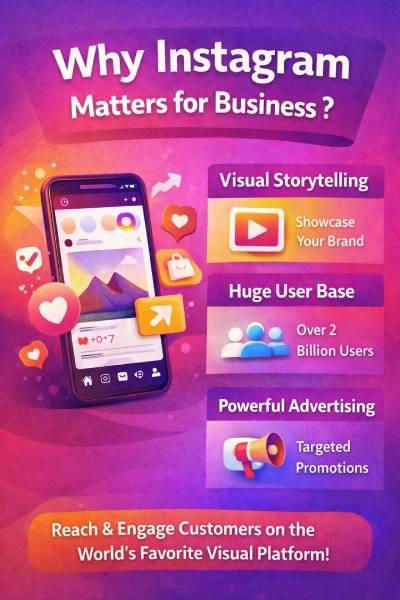
Instagram is a critical tool for any modern business. It is due to its massive reach, high engagement, and sophisticated commerce features.
With over 2 billion monthly users, Instagram provides a huge market. It covers nearly 90% of users who already follow a business. This audience is highly active and skews younger. It makes it ideal for reaching Gen Z and Millennials. They are actively looking for brands and products on the platform.
The platform has embraced short-form content through Reels. It is now the best way for brands to gain organic reach and get discovered by new audiences. This focuses on dynamic, often authentic video content. It helps brands build relatability & a strong, memorable visual identity that connects deeply with viewers.
Instagram functions as both a powerful discovery tool and a direct sales engine. Most consumers use the app for purchase inspiration. Crucially, features like Shoppable Posts and Instagram Shops allow users to click on a product and buy it instantly without leaving the platform. Thus, streamlining the entire purchasing process.
How to Create an Instagram Business Account ?
To use Instagram effectively for sales and marketing, one must first switch to a Business Account. It grants access to vital tools like analytics (Insights), advertising features & special contact buttons. One can convert an existing personal profile or create a new one, using your brand name and email.
Profile Optimization and Shopping
Next, you must treat your profile as a professional storefront. This means using your clear company logo as the profile picture. Also writing a concise bio that explains what you do. And by adding a functional website link (often using a link-in-bio tool).
For selling physical goods, you must enable Instagram Shopping. This requires linking a product catalogue. It is a master file of your inventory managed through Meta Commerce Manager. Various E-Commerce platforms automatically sync products. Thus, allowing you to use Shoppable Tags in all your content formats. This is essential for turning browsing into quick, in-app sales.
Utilizing Instagram’s Shopping Features :
Instagram Shopping allows brands to turn their content directly into a sales channel. The process begins with Setting up an Instagram Shop. It requires a Business Account, selling physical goods. Also most importantly, linking a Product Catalog managed in Meta Commerce Manager. Once approved, the dedicated Shop tab is activated on your profile.
Making Content Shoppable
The core power lies in Product Tagging. You can tag items directly in your posts, Reels, and Stories. This allows viewers to tap a visible tag or sticker. It instantly sees the product details and price, and moves to purchase. For instance, tagging a dress in a Reel converts an entertainment video into a potential point of sale.
Boosting Conversions and Organization
Shoppable content significantly boosts conversions. It eliminates steps : the user goes straight from discovery to purchase in just a few taps, capitalizing on impulse buying. To keep the shop organized, brands use Collections (Product Sets) within their catalogue. For e.g., “Holiday Gifts”. These collections allow the brand to curate & categorize their products on the Shop tab. Thus, making the shopping experience much smoother for the customer.
7 Tips on How to Use Instagram for Business Effectively :
- Define Roles and Responsibilities: Establish clear boundaries between Marketing and Customer Service teams. It helps to know exactly which public comments or DMs they are responsible for. This prevents crucial customer issues from being missed or delayed. Thus, ensuring every customer interaction is handled professionally.
- Respond Quickly: Prioritize rapid responses to DMs and comments. Customers expect near-instant feedback on social media. Quick replies not only satisfy customers but also signal high engagement to the Instagram algorithm. It helps to increase the visibility of your content.
- Leverage AI and Automation: Use automated DM replies for off-hours. Also deploy chatbots to efficiently handle common customer FAQs. Implementing custom routing workflows can automatically tag and direct complex sales or support inquiries to the right human agent. Thus, improving overall operational efficiency.
- Track Performance Metrics: Go beyond just counting followers. Also use Instagram Insights to track key metrics that drive business decisions. It includes Reach, Engagement Rate (especially saves and shares) & crucial Conversion Rates from shoppable content. This ensures your strategy is always data-driven.
- Utilize All Instagram Features: Maintain content variety by consistently using Reels for broad discovery, Stories for authentic, real-time updates, and Highlights to permanently archive essential information. Actively incorporating interactive features like polls and questions in Stories boosts feedback and engagement.
- Know When to Move Comments to DMs: Any conversation requiring the exchange of sensitive personal information (like order numbers or shipping addresses) or complex customer complaints must be immediately moved from public comments to private Direct Messages. This protects customer privacy. Also it controls the brand’s public narrative, and facilitates a personalized resolution.
- Integrate Instagram for Business With Support Software: Connect Instagram account to a CRM or specialized support platform. This creates a unified inbox where agents can manage all customer conversations (DMs, comments, email, etc.) in one place. Thus, providing them with a complete customer history for faster, more context-aware service.
Instagram Ads for Business Growth :
Instagram advertising, managed through Meta Ads Manager, is the most effective way to guarantee content reaches high-intent users, rapidly scaling your brand awareness and conversions far beyond your organic follower base.
Types of Instagram Ads :
Instagram offers a variety of ad formats that align with its organic content types, allowing businesses to choose the format best suited for their goal.
|
Ad Type
|
Placement
|
Best Used For
|
|---|---|---|
|
Photo/Image Ads
|
Feed, Explore
|
Simple product showcases, brand awareness, or driving traffic with a single, compelling visual.
|
|
Video Ads
|
Feed, Explore
|
Brand storytelling, product demonstrations, or building an emotional connection.
|
|
Carousel Ads
|
Feed, Stories, Explore
|
Showcasing multiple products, different product features, or telling a sequential story in up to 10 cards.
|
|
Stories Ads
|
Between Stories
|
Full-screen, immersive, and often urgent promotions using interactive elements like polls and stickers.
|
|
Reels Ads
|
Between Reels
|
High-reach format for maximum discovery; typically short, attention-grabbing, vertical videos that look like native content.
|
|
Collection Ads
|
Feed, Stories
|
E-commerce focused, featuring a lead video/image with smaller product images below, allowing users to browse a catalog directly.
|
To ensure ads are effective, Instagram uses sophisticated Targeting Options. This includes defining a Saved Audience. It is on the basis of demographics and interests, creating a Custom Audience to retarget people who have previously engaged with the brand like website visitors or past engagers. Also building a powerful Lookalike Audience to find new customers who statistically resemble your best current customers.
Setting Ad Goals : Traffic, Engagement, Conversions
|
Goal Type
|
Objective
|
Key Metric to Track
|
|---|---|---|
|
Awareness (Top of Funnel)
|
Increase brand recall and reach.
|
Reach, Impressions, Video Views.
|
|
Consideration (Middle of Funnel)
|
Encourage people to seek more information.
|
Traffic (Link Clicks), Landing Page Views, Leads (form fills).
|
|
Conversion (Bottom of Funnel)
|
Drive direct action and sales.
|
Purchases (Conversions), Cost Per Acquisition (CPA), Return on Ad Spend (ROAS).
|
To maximize ROI, advertisers should constantly A/B test different creative visuals. They should prioritize mobile-friendly video ads, especially Reels. Also it dedicates budget to retargeting funnels to close sales with warm leads who have already shown interest. Using Lookalike Audiences is key to efficiently scaling successful campaigns. It helps to find a broader pool of highly qualified new customers.
Utilizing Influencers and Collaborations :
Collaborations, especially with micro-influencers. They offer high engagement and specialized audiences. They are vital for building trust and scaling your brand on Instagram. Unlike traditional ads, influencer endorsements feel like peer recommendations.
When evaluating potential partners, look past the follower count. It is the most critical metric is the Engagement Rate. It confirms they have an active, loyal audience. Thus, ensuring their demographics align with your target customer.
Effective campaigns involve Co-Created Content where the brand and creator work together using official “Paid Partnership” tags. It helps to produce content that feels authentic to the influencer’s style.
Even more authentic is User-Generated Content (UGC). It is where the actual customers post reviews & provides the ultimate social proof when re-shared by the brand. To measure the success of these partnerships, always use unique discount codes or UTM tracking links. It helps to accurately attribute sales and conversions back to the influencer.
Future Trends : The Next Phase of Instagram for Business
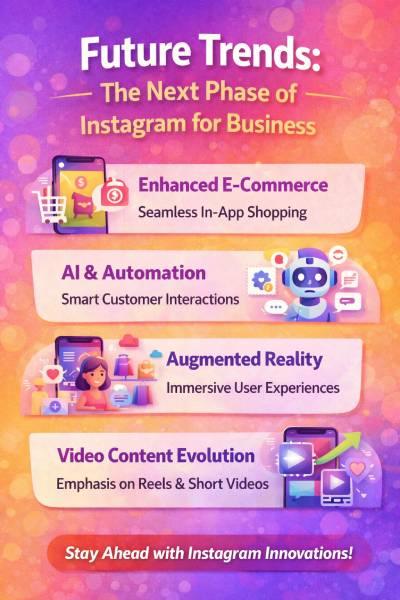
The next phase of Instagram will be dominated by Artificial Intelligence (AI). It will offer smarter content suggestions to businesses and deliver hyper-personalized recommendations to users. Thus, making ads feel more relevant and driving higher engagement.
This AI focus also supports the shift toward truly immersive shopping experiences. It includes widespread use of Augmented Reality (AR) try-on filters and interactive live stream shopping events. Thus, blending entertainment and commerce.
Finally, the Direct Message (DM) inbox will become a key sales and support channel. The businesses are increasingly relying on advanced automation and chatbots to manage personalized interactions. Also it qualifies leads, and handles transactions entirely within the chat interface.

Using Botbuz Chatbot for Instagram Business Automation :
Botbuz is a chatbot tool. It automates Instagram DMs and comments. Also it offers instant FAQ replies, lead capture, and smart routing to human agents. It provides faster, 24/7 customer support. Thus, reducing staff workload, and ensuring a consistent brand voice. Common uses include welcome messages & automated replies to Story mentions. Also it manages interactive, keyword-based DM campaigns. Its no-code setup & easy integration make it an essential tool for both marketing & customer service teams.
Conclusion :
Integrating chatbots for Instagram business automation is essential for scaling and optimizing operations. They transform the DM inbox into a proactive sales and support engine. It provides 24/7 personalized service and automatically handles high-volume FAQs and lead qualification. This efficiency reduces costs and allows human teams to focus on complex tasks. Ultimately, chatbots ensure brands are always responsive. Thus, turning high engagement into measurable business outcomes and lasting customer loyalty.