- Growing Popularity of Instagram for Brands :
- What Makes Instagram a Powerful Business Platform?
- Why Do Businesses Use Instagram?
- Is Your Business Type a Good Fit for Instagram?
- How to Decide if Instagram Is Right for the Business ?
- Reasons to Consider Instagram for Business :
- Get Help Managing Your Instagram Account with Botbuz Automation :
Growing Popularity of Instagram for Brands :
Instagram has evolved from a simple photo app into a visual search engine and commerce hub. The brands can reach customers instantly through AI-driven discovery. While its popularity is surging because it shortens the path from “seeing” to “buying”. Many businesses still hesitate due to the high cost of producing constant video content & the unpredictability of the algorithm.
Is Instagram right for the business? This creates a strategic dilemma. Companies feel they must be on the platform to remain relevant and build trust. Yet they struggle to prove the heavy investment of time and creative energy. It is actually translating into a measurable return on investment.
What Makes Instagram a Powerful Business Platform?
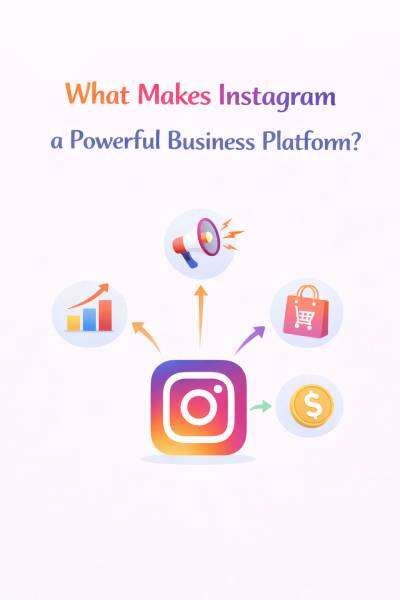
Instagram’s power comes from its ability to turn visual storytelling into a high-speed search engine. Because it prioritizes video and imagery. It allows brands to build an instant emotional connection with customers that plain text or traditional ads can’t match.
The platform is a leader in active engagement. It means users don’t just scroll past; they save, share, and interact. This creates a “trust loop” where consistent participation from a brand builds a loyal community. It is far more likely to buy than a cold audience on other sites.
Finally, Instagram offers a complete business toolkit that handles the entire customer journey. Between Reels for discovery, Stories for daily updates, and Shops for instant checkout, it removes the friction of sending people to an external website. Thus, making the transition from “fan” to “customer” almost seamless.
Understanding Target Audience on Instagram :
Instagram is dominated by the 18–34 age group. Though older generations are the platform’s fastest-growing segment. Most users now treat the app like a search engine, Gen Z, in particular. They use it to “look up” brands to see if they are trendy, authentic, and active before making a purchase.
To see if the specific customers are there, one can use the Professional Dashboard to view “Insights.” This tool shows you the exact age, location, and hours your followers are online. One can also “lurk” on the competitors’ pages; if their posts are getting comments and tags. Also the audience is definitely present and ready to engage.
Finally, it’s important to watch how they interact. In today’s landscape, a “Save” or a “Direct Message” is worth much more than a “Like.” These actions show high intent. It signals that the user isn’t just scrolling past. But it is actually considering the product for a future buy.
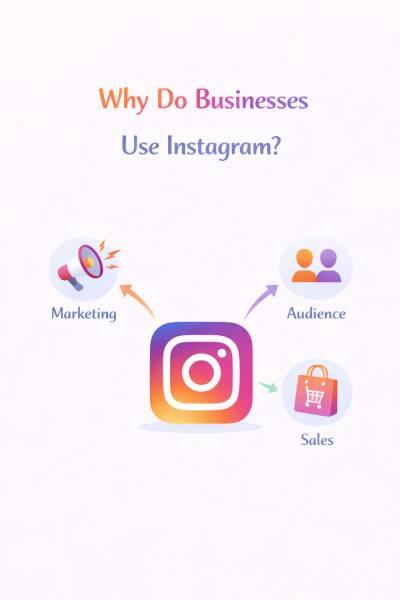
Why Do Businesses Use Instagram?
Businesses use Instagram as a digital storefront. It is the fastest way to turn a visual “discovery” into a sale. By using product tags & shoppable ads, brands can lead a customer from an interesting Reel directly to a checkout page. It makes the buying process almost frictionless.
Beyond sales, the platform is a massive awareness engine. Reels help to get discovered by thousands of strangers. The stories allow us to show the human side of the business. This combination keeps the brand “top-of-mind” so that when a customer is ready to buy, yours is the first name they remember.
Finally, Instagram serves as a vital insurance policy for your marketing. By building a presence there, you aren’t relying solely on Google search or a single website. It allows diversification of reach across the entire Meta ecosystem. It includes Facebook and WhatsApp. Thus, ensuring that even if one channel slows down, business stays visible & connected.
Is Your Business Type a Good Fit for Instagram?
The success of a business on Instagram depends largely on how “visual” or “experience-based” the brand is. Industries like fashion, beauty, food & local services remain the top performers. It is because their value can be captured instantly in a Reel. For these brands, the platform acts as a digital storefront. It is where customers can “feel” the product before buying.
The B2C companies use the platform as a direct sales engine. B2B businesses have found a different kind of success. Instead of selling products, B2B firms use Instagram to build “professional trust”. It is done by showing their office culture and sharing expert tips. This humanizes their corporate image. Thus, making it easier for them to close deals with decision-makers who also use the app.
The strategy also shifts based on whether a brand sells products or services. Product-based businesses win by using “shoppable” features that allow for one-click buying. On the other hand, service-based brands like consultants or contractors win by sharing educational content and “before-and-after” transformations. It proves their expertise and encourages users to save their posts for future needs.
How to Decide if Instagram Is Right for the Business ?
Determining if Instagram is a fit requires looking at who is using the app and why. Over 60% of users are between 18 and 34. They are increasingly using the platform as a search engine. A brand must decide if its target demographic is part of this “discovery-hungry” group. Rather than assuming, a business should directly poll its existing customers. It helps to see if they actually want to engage with the brand in a social setting.
A strategic brand also performs a competitor & influencer audit to find “content gaps”. By looking at what rivals are doing—or failing to do—in the comments and Reels sections, a company can identify specific opportunities to stand out. Similarly, watching the influencers that their audience follows provides a roadmap for what kind of content and shopping features are already performing well within that niche.
Finally, the decision rests on internal bandwidth. In 2026, Instagram demands high-quality video and rapid DM responses, which can take 5 to 10 hours a week. A business must honestly assess if it has the time and editing skills to be consistent. Otherwise, it may be better to focus on paid ads or a different platform entirely rather than maintaining a ghost town profile.
Reasons to Consider Instagram for Business :
Instagram has solidified its position as the world’s most versatile “social storefront.” While other platforms focus on pure entertainment, Instagram has mastered the balance between discovery and direct action.
1. High Engagement & Multi-Dimensional Interaction :
Instagram consistently outperforms most traditional social networks in engagement. Because it offers multiple “layers” of interaction :
Active Engagement: Unlike the “passive scroll” of other platforms, Instagram users are conditioned to Save (for future reference), Share (to private groups), and DM (for customer service).
Interactive Tools: Features like Polls, Quizzes, and Sliders in Stories turn viewers into active participants. In 2026, these are used by brands as instant, free market research to test product ideas before they launch.
Response Speed: The platform is designed for “fast-twitch” communication. With automated DM replies and AI-assisted customer support, businesses can resolve inquiries in minutes, which is a major trust-builder for modern consumers.
2. Powerful Visual Storytelling (The "Vibe" Factor) :
Instagram is the primary place where a business builds its Brand Voice. It is through a mix of unpolished and professional content :
The Reel Advantage: Short-form video (Reels) is the platform’s “organic engine.” In 2026, high-energy, 5-to-8 second Reels are the most effective way to grab attention. It gets pushed to new audiences by the algorithm.
Stories for Authenticity: While the feed is the “storefront window,” Stories are the “behind-the-counter” experience. This is where brands humanize themselves with “day-in-the-life” clips. Thus, building the loyalty that leads to long-term advocacy.
3. Integrated Shopping & Community :
Instagram has removed the friction between “seeing” and “buying” :
Full-Funnel Commerce: From discovery (Reels) to research (Stories/Highlights) to purchase (Instagram Shops), a customer can complete their entire journey without leaving the app.
Community Building: In 2026, the focus has shifted from “gaining followers” to “building micro-communities.” Loyal followers who interact with your content frequently become brand advocates. It essentially acts as an unpaid sales force by sharing content with their own networks.
Reusable Content: A single high-quality video can be used as an organic Reel, a paid ad, and a Story highlight. It gives businesses a high return on their creative investment.

Get Help Managing Your Instagram Account with Botbuz Automation :
Botbuz serves as a specialized AI automation layer. It transforms a business’s Instagram into a self-operating sales and support engine. By utilizing a “no-code” visual builder, it allows companies to automate instant replies to comments, Story mentions, and direct messages based on specific keyword triggers, effectively eliminating the delays of manual response. This system provides customers with the immediate satisfaction they expect. It also acts as a sophisticated lead qualification tool. Thus, capturing vital data like emails and syncing them directly to a brand’s CRM.
Ultimately, the platform shifts Instagram from a simple engagement tool to a streamlined commerce funnel. It is where high-volume interactions are converted into measurable business opportunities without requiring additional staff or hours.
Conclusion :
Determining if Instagram is right for the business depends on the ability to leverage visual storytelling. It helps to reach a discovery hungry audience that increasingly uses the app as a search engine. The platform offers unmatched potential for brand awareness and direct commerce. Also the high demand for consistent video content & rapid interaction often creates a resource gap.
Botbuz Automation bridges this gap. It acts as a 24/7 digital assistant, using keyword triggers and automated flows. It helps to handle DMs, qualify leads, and provide instant responses. By combining a creative content strategy with these automation tools, businesses can scale their presence efficiently, ensuring that every “like” or “comment” is converted into a real business opportunity without overwhelming their team.