- Why Understanding Customer Journeys Matters Today ?
- What is Customer Journey Analytics?
- Why do Brands Lose Track of Customer Behaviour?
- How to Turn Consumer Journey Analytics into Real-time ROI?
- How does Customer Journey Analytics Make a Difference?
- Customer Journey Analytics vs. Customer Journey Mapping: Key Differences to Remember
- How Customer Journey Analytics Works?
- What are the Key Benefits of Customer Journey Analytics?
- What Challenges Might You Run into While Evaluating Customer Journey Analytics?
- How Does Customer Journey Analytics Elevate Consumer Experience?
- How Botbuz Improves WhatsApp Customer Journeys?
Why Understanding Customer Journeys Matters Today ?
Imagine a business is like a storyteller watching a person go on a long adventure. Instead of just seeing the very end where the person buys a product, Customer Journey Analytics allows the business to see every single step of that trip. Right from the first time they saw an ad on their phone to the moment they asked a question in a chat app.
By connecting these dots, the company can stop guessing and actually see where people are getting confused or bored. It turns messy piles of data into a clear map. It makes it easy for the business to fix problems and create a much smoother path for the customer to follow.
What is Customer Journey Analytics?
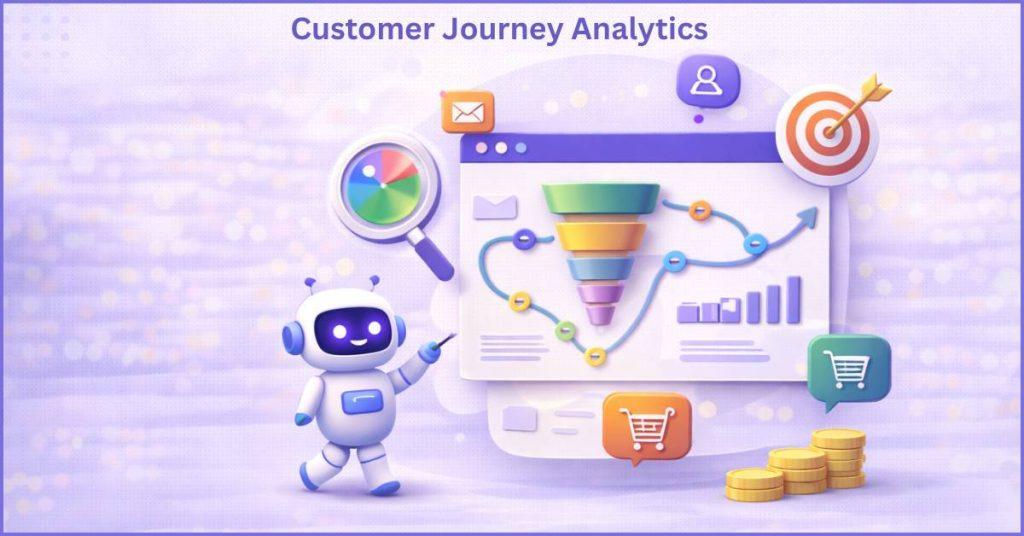
Customer Journey Analytics is the process of tracking every single “touchpoint” a person has with a company across different platforms. It is like clicking a social media ad, chatting with a bot, and finally buying an item. It helps to see the full story of their experience. While raw data is just a giant, messy pile of facts (like “1,000 people visited the website”), actionable insights are the “aha!” moments. It comes from organizing that data to show exactly what to fix like “70% of people leave the website because the chat button is too hard to find”.
In a world of omnichannel marketing, where people jump between Instagram, email, and messaging apps, this analysis is vital. It ensures the conversation stays consistent & smooth no matter where the customer decides to talk to the brand.
Why do Brands Lose Track of Customer Behaviour?
Brands often lose track of customer behaviour. It is because they view these interactions as isolated events rather than a continuous story. When a business doesn’t connect the dots between these different actions, they miss out on the “why” behind a customer’s decision.
1. Website Signals: The Silent Language
A potential buyer tells a story through every click, scroll, and pause. When a brand fails to track how long someone dwells on a product description or how far they scroll down a page, they miss out on behavioral insights. Without this, the website is just a digital brochure rather than a tool that understands what the visitor is actually looking for.
2. WhatsApp Lead Management: The Conversation Chaos
WhatsApp is great for quick chats. But for many brands, these conversations become unorganized very quickly. If a business doesn’t have a system to track who needs a follow-up or what a customer asked two days ago, the lead goes cold. Without follow-up tracking, a high-interest inquiry simply vanishes into a sea of old messages.
3. Instagram Ad Engagement: The Disconnect
A shopper might click a beautiful Instagram ad, engage with a post, and then leave. Most brands lose the trail here because there is no unified tracking. If that same person visits the website later, the brand often treats them like a total stranger instead of recognizing them as the person who just liked their ad.
4. Search Engine Traffic: Ignoring the "Returners"
When someone searches for a specific product multiple times, they are showing high intent. However, brands often treat returning users the same as first-time visitors. By failing to use intent-based segmentation, they miss the chance to offer a special “welcome back” incentive to someone who is clearly ready to buy.
5. Checkout Behavior: The Final Hurdle
The checkout page is where the most valuable data lives. Yet abandoned carts are often ignored. If a brand doesn’t analyze why someone left at the final step, was it shipping costs, a long form, or a technical glitch? They lose a nearly-guaranteed conversion opportunity. Analyzing these exits turns a lost sale into a lesson on how to improve the next one.
How to Turn Consumer Journey Analytics into Real-time ROI?
Turning analytics into real money right away. It is all about a business acting like a fast-thinking assistant rather than a slow student. Instead of waiting weeks to read a report, the company uses real-time data to spot problems. It is like a broken “Buy” button and they fix them in seconds. They set up automated triggers, which are like “smart alarms”. It instantly sends a helpful message or a discount code if they see a customer looking at an item but hesitating to buy it.
By using personalization, the business can treat every person differently. For example, they might show a “How-To” video to a new visitor while offering a quick “Check-out” link to a regular fan. This way, the brand doesn’t just watch the customer’s journey, they jump in at the perfect moment to help them finish it.
How does Customer Journey Analytics Make a Difference?
Customer Journey Analytics changes everything. It helps a business act like a helpful guide who already knows the path ahead. Instead of showing random ads to everyone, the brand uses better targeting to only show people things they actually care about. It saves time and stops people from getting annoyed.
It makes the customer experience feel much smoother. It is because the company remembers past conversations, so the customer never has to repeat themselves when moving from an app to a website. Finally, it increases conversions by finding and fixing the “potholes” in the digital road like a confusing checkout page. Thus, making it much easier for someone to go from just looking to actually making a purchase.
Customer Journey Analytics vs. Customer Journey Mapping: Key Differences to Remember
Understanding the difference between these two is like comparing a hand-drawn map to a live GPS. Customer Journey Mapping is like sitting down and drawing a picture of the path you hope a customer will take. It focuses on how they might feel along the way. On the other hand, Customer Journey Analytics is the actual data. It shows where people are really going in real-time. It often reveals that they are taking shortcuts or getting lost in ways the business didn’t expect.
While a map is a static plan used for brainstorming big ideas, analytics provides dynamic insights. It changes every second, allowing a company to see exactly where people are “tripping” so they can fix the problem immediately. Mapping helps a brand dream up a great experience. But analytics gives them the cold, hard facts they need to make it work perfectly.
How Customer Journey Analytics Works?
Think of this process like a high-tech detective agency working in two stages. In Phase 1, the business gathers all the “clues”. It connects different apps like WhatsApp, Instagram, and their own website into one big system so they don’t miss a single step a customer takes.
Once all that information is in one place, Phase 2 kicks in. It is where the computer turns those messy clues into clear, colorful charts & “to-do lists.” Instead of just looking at a pile of random numbers, the business gets a clear picture that tells them exactly where customers are happy and where they are getting frustrated. By the end, the company isn’t just guessing anymore; they have a visual map that shows them exactly how to make the customer’s journey smoother and faster.
What are the Key Benefits of Customer Journey Analytics?
Using Customer Journey Analytics is like giving a business a set of superpowers that help them run much more smoothly. First, it leads to better decision-making because the company can see exactly where customers are getting confused, almost like having a “cheat code” for a difficult video game.
This leads to a higher ROI, which is just a fancy way of saying they make more money without wasting it on ads that don’t work. It also helps with customer retention, allowing the brand to spot when a customer is unhappy and reach out to help before they quit. Finally, it creates better personalization, making the customer feel special because the brand remembers their likes and dislikes, turning a regular shopping trip into an experience that feels custom-made just for them.
What Challenges Might You Run into While Evaluating Customer Journey Analytics?
Setting up this kind of system can be a bit like trying to build a giant Lego set where the pieces are scattered in different rooms. One big problem is data silos, which happens when different teams in a company don’t share their information, making it impossible to see the whole story.
Then there are integration issues, where different apps and websites don’t “speak the same language” and refuse to work together properly. Brands also have to be very careful about privacy, because nobody wants a company to feel “creepy” or lose their personal information. Finally, the complexity of having so much data can be overwhelming; it’s like trying to listen to one person talking while a hundred other people are shouting at the same time. These hurdles make it tricky for a business to get a clear, honest picture of what their customers are actually doing.
How Does Customer Journey Analytics Elevate Consumer Experience?
Customer Journey Analytics turns a brand into a much better listener, making the whole experience feel like a smooth, continuous story. It creates a seamless omnichannel experience, which means if you start a chat on Instagram and finish it on a website, the business doesn’t forget who you are or what you need.
Because the company can see exactly where you are in your journey, they can offer a faster response time by jumping in to help the second you look stuck. Finally, it makes sure you only get relevant communication, so instead of getting annoying ads for things you don’t want, you only see helpful tips or offers for things you actually like. Overall, it makes shopping feel less like a chore and more like the brand is a helpful friend who is always one step ahead.

How Botbuz Improves WhatsApp Customer Journeys?
Botbuz acts like a smart brain for a business’s WhatsApp, turning a simple chat app into a powerful tool that guides customers from “just looking” to “ready to buy.” By using the Botbuz Chatbot for automation, companies can handle thousands of conversations at once without ever getting tired, making sure no customer is ignored. It provides real-time responses, which means if someone asks a question at 2:00 AM, the bot answers instantly, keeping the person engaged while they are still interested.
Lead tracking and nurturing allow the business to remember exactly who each person is and what they liked, so they can send a friendly follow-up message a few days later to see if they need more help. Finally, because the system knows the customer’s history, it can use personalized communication to suggest the perfect products or offers, making the conversation feel like it’s coming from a helpful friend rather than a robot.
Conclusion :
Understanding a customer’s path is like having a “cheat code” for business that helps everyone win. By using Customer Journey Analytics, a brand can stop guessing what people want and start seeing the real story of how they shop, making it much easier to fix problems and increase conversions. Tools like the Botbuz Chatbot make this even better by acting as a smart, 24/7 assistant on WhatsApp that remembers every customer’s preferences.
It turns boring data into personalized conversations and instant help, ensuring that no one gets lost or frustrated along the way. Ultimately, when a business uses these tools together, they aren’t just selling products—they are building a smooth, stress-free experience that keeps customers coming back for more.