- Smart Qualification Building Trust from the First Message :
- Why Do Traditional Qualification Questions Feel Pushy to Buyers?
- What Are Smart Qualification Questions?
- How Does Botbuz Discover Customer Needs Without Direct Interrogation?
- Types of Smart Qualification Questions Used by Botbuz :
- Make Botbuz AI Smart Qualification Feel Helpful :
- FAQs :
Smart Qualification Building Trust from the First Message :
Modern sales qualification has shifted from a one-sided interrogation to a value-driven dialogue. Instead of using high-pressure checklists that make buyers defensive, smart sellers now use “give-to-get” conversations. It offers immediate insights in exchange for information.
This approach meets the expectations of today’s buyers. They crave the speed & ease of messaging apps & prefer a personalized, low-pressure experience. By acting as a consultative guide rather than a gatekeeper, it builds the trust necessary to uncover a lead’s true needs, budget & timeline more effectively.
Why Do Traditional Qualification Questions Feel Pushy to Buyers?
Traditional qualification feels pushy. It prioritizes the seller’s data needs over the buyer’s experience. It often resembles a cold interrogation rather than a helpful consultation. By sticking to rigid scripts and asking for sensitive details like budget or decision-making power—too early in the relationship, sellers create friction that triggers buyer defensiveness.
This lack of personalization signals that the seller isn’t actually listening. It ultimately damages trust and leads to high drop-off rates. Instead of building a partnership, aggressive questioning makes the buyer feel like a transaction. It often results in them withholding information or abandoning the process entirely.
What Are Smart Qualification Questions?
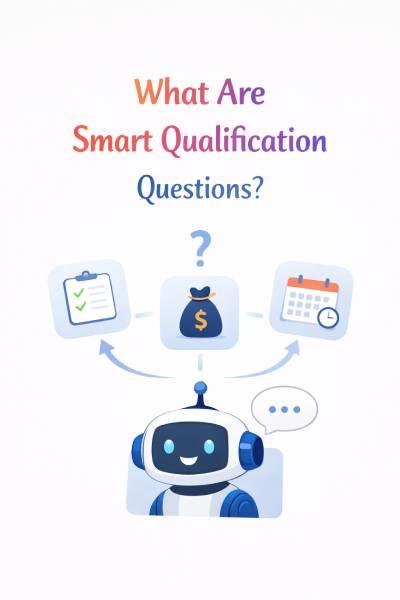
Smart qualification is the transition from extractive interrogation to insight-driven discovery. The information is gathered through a natural, value-led dialogue. Instead of using rigid forms, AI uses contextual clues. It includes user behaviour or specific technical questions to infer lead details without being intrusive.
This approach benefits both sides. 1) Customers enjoy a low-friction, personalized experience that feels like a consultation. 2) sales teams receive higher-quality, more honest data. By offering value in exchange for information, smart qualification builds immediate trust. It streamlines the journey from the first message to the final sale.
How Does Botbuz Discover Customer Needs Without Direct Interrogation?
Botbuz eliminates pushy interrogations. It uses data and technology to “listen” before it speaks. Also it leverages previous interaction history and behavioural signals. It helps to understand a user’s intent without asking repetitive questions.
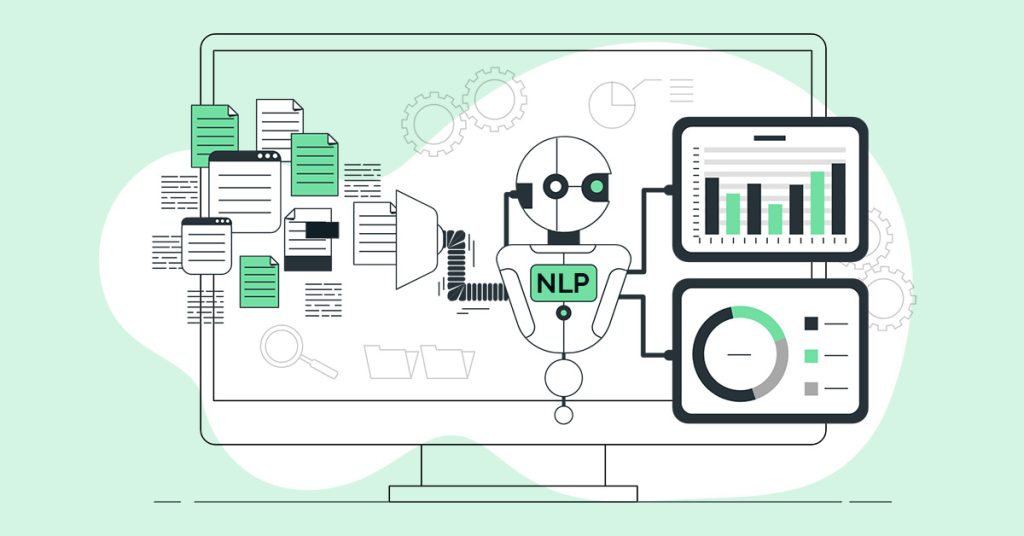
Through advanced Natural Language Processing & real-time context, it interprets informal language & browsing patterns. It helps to guide conversations naturally, providing value-based insights instead of rigid sales scripts. It focuses on open-ended discovery and automated nurturing. Thus, Botbuz allows customers to move at their own pace. Thus, building genuine trust & gathering high-quality lead data through a seamless, human-like experience.
Types of Smart Qualification Questions Used by Botbuz :
To maximize engagement, Botbuz utilizes a tiered approach to questioning. It feels less like a form and more like a fluid conversation. By categorizing questions into specific types, the AI ensures it gathers the right data at the right moment.
4 Categories of Smart Questions :
Intent-Based Questions : These focus on the “Why.” Instead of a generic “How can I help?”. Botbuz asks, “Are you looking to automate your support or increase your outbound sales?” This instantly narrows the path to the user’s specific goal.
Preference-Based Questions : These gather the “How.” They subtly uncover budget, urgency, and preferred communication channels. It offers choices, such as, “Would you prefer a quick overview here, or should I email you our full enterprise pricing guide?”
Behavior-Based Questions : These are often “silent” questions. If a user spends time on a specific integration page, Botbuz doesn’t ask if they need integrations. It offers a targeted insight : “Since you’re looking at our API docs, would you like to see our pre-built Salesforce connectors?”
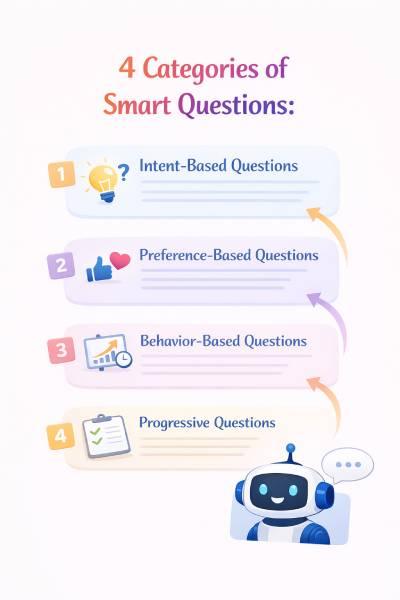
Progressive Questions : This is the “step-by-step” method. Botbuz collects one piece of data at a time, woven into the dialogue. It asks for a name at the start & a business challenge in the middle. Thus, it prevents “form fatigue” and keeps the user moving forward.
The Role of AI and Conversation Logic in Smart Qualification :
Botbuz combines drag-and-drop conversational flows with AI-driven branching logic. It helps to create qualification experiences that adapt in real-time. By using NLP to detect intent and sentiment, the AI can pivot the conversation. It is on the basis of a user’s specific words, skipping irrelevant questions & providing “next-best-experience” suggestions. This ensures that every interaction feels like a personalized consultation rather than a rigid form. Thus, allowing businesses to qualify leads naturally while providing immediate value.
How to Implement AI-Powered Qualification Flows?
To implement AI-powered qualification, one must map the customer journey. It helps to create intent-based paths that provide specific value at every touchpoint. By integrating Botbuz with CRM and marketing stack, the insights gathered during these conversations are instantly accessible to the sales team. It ensures a seamless transition from bot to human. Finally, by continuously testing & optimizing the flow based on user behaviour, one can eliminate friction points. It refines the dialogue to maximize both lead quality & buyer trust.
Smart Qualification Across Industries :
Across industries, smart qualification succeeds by matching the tone and pace of the specific buyer journey. Whether it’s acting as a personal shopper in E-commerce, a project consultant in Services, or an empathetic advisor in Real Estate & Education. Botbuz replaces rigid forms with dynamic discovery. It focuses on the user’s goals first and gathers technical requirements second. Thus, businesses can qualify leads effectively. It maintains a high-trust, “human-first” experience that significantly reduces drop-off rates.
The Future of Smart Qualification :
The future of smart qualification is a shift from reactive data collection to proactive intent-based engagement. It replaces rigid lead scores with real-time intent scoring & static forms with conversational AI agents. So businesses can deliver hyper-personalized experiences at an infinite scale. This predictive approach allows sales teams to bypass the “gatekeeping” phase of qualification. It moves directly into high-value consulting. Thus, shortening sales cycles and building deeper buyer trust.

Make Botbuz AI Smart Qualification Feel Helpful :
The key to smart qualification with Botbuz is positioning the AI as a supportive guide. It gathers information to improve the customer’s experience. It uses natural dialogue best practices like acknowledging user input and providing immediate value. Thus, businesses can replace high-pressure sales tactics with a trust-first approach.
Ultimately, when an AI listens more and sells less, it creates a frictionless journey. It is where qualification feels like a helpful conversation. Thus, leading to higher-quality relationships and more closed deals.
Conclusion :
The shift toward Smart Qualification marks the end of the “gatekeeper” era in sales. It replaces rigid, high-pressure forms with Botbuz’s natural, intent-driven dialogue. So the businesses can transform a traditionally cold process into a trust-building experience. Smart qualification isn’t just about getting answers. It’s about providing enough value that the customer wants to share their story.
When a system like Botbuz understands customer needs naturally by “listening” to behavioural signals, honoring context, and offers help instead of just asking for data the friction of the sales cycle evaporates. You stop being a vendor chasing a lead and start being a partner solving a problem. In this world buyers have endless choices. The winner isn’t the one with the best script. It is the one who creates the most human-centric, effortless path to a solution.
FAQs :
- What makes a qualification question “smart” versus “pushy”?
A pushy question is extractive. It asks for data (like “What is your budget?”) without giving anything back. A smart question is collaborative. It provides value or context in exchange for the answer. For example, instead of asking “What’s your company size?”, a smart AI asks : “Since you’re managing a growing team ? Are you looking for a solution that scales automatically or one with fixed user seats?”
- How does Botbuz know what a customer needs without asking directly?
Botbuz uses Intent Detection and Entity Extraction. By analyzing the user’s natural language—even if they use slang or incomplete sentences, the AI can identify “micro-signals.” If a user asks about “integrating with Slack,” Botbuz immediately knows they are a tech-forward team. It flags “integration” as a key need, skipping the need to ask “Is integration important to you?”
- Can a chatbot really build trust like a human salesperson?
Yes, by practicing Active Listening at Scale. Botbuz builds trust through Context Retention. It remembers what the user said earlier in the chat. Nothing kills trust faster than a bot (or human) asking the same question twice. By layering new information onto old context, Botbuz proves it is “listening”. It makes the buyer feel valued rather than processed.
- What is “Progressive Qualification,” and why is it better?
Traditional forms demand 10 answers upfront, leading to high “form fatigue” and drop-offs. Progressive Qualification spreads these questions out across a natural dialogue. Botbuz might ask about goals on page one. The timeline on page three & budget only after it has shown you a personalized recommendation. This keeps the friction low and the engagement high.
- How does Botbuz handle users who aren’t ready to buy yet?
Instead of forcing a “Book a Demo” button on every user, Botbuz uses Behavioral Branching. If a user’s signals suggest they are in the “Educational Phase,” the AI pivots to becoming a resource hub. It offers whitepapers or videos. This “Nurture-First” approach ensures you stay top-of-mind without being perceived as a nuisance.
- Does “Conversational” mean the bot has to be chatty and slow?
Not at all. In fact, smart qualification is often faster than traditional methods. Because the AI interprets entire sentences at once, it can apply multiple “filters” simultaneously. A user said, “I need a red, waterproof jacket under $100”. It allows Botbuz to skip three separate qualification steps & jump straight to the curated results.
- How does the data from these conversations get to my sales team?
Botbuz integrates directly with your CRM (like HubSpot, Salesforce, or Zoho). Every need, preference & intent signal captured during the chat is automatically synced to the lead’s profile. When a sales rep finally hops on a call, they don’t start with “Tell me about your business”, they start with “I saw you were looking for X to solve Y; let’s talk about how we do that.”