
- Rise of Blended Messaging in Customer Outreach :
- What Causes Low Delivery Rates in Broadcast Messaging :
- The Hidden Delivery Gaps Businesses Do Not Talk About :
- Why Single-Channel Strategies Fail Today?
- The Power of a Blended Messaging Strategy :
- Introducing Botbuz SMS Marketing and SMS Fallback :
Rise of Blended Messaging in Customer Outreach :
Brands are moving from single-channel outreach (like just email) to blended messaging. It uses a mix of channels like SMS, WhatsApp, Email, and Push Notifications to reach customers. The goal is to create a seamless conversation through Broadcast Campaigns. For this strategy to work, achieving a high message delivery rate is absolutely critical. A perfect message that never arrives is a wasted effort and a lost opportunity for sales.
For truly important communications—like payment confirmations, security alerts, or one-time passwords (OTPs)—simply having a high delivery rate isn’t enough. Brands now require guaranteed message delivery. This involves setting up smart systems that use channel fallback logic. For example, if a high-priority push notification fails, the system automatically sends the content via SMS immediately.
When a notification does not get delivered, it causes serious problems. It directly impacts sales and revenue because customers miss out on time-sensitive offers or crucial alerts. It also creates a terrible customer experience (CX). It forces people to chase information or repeat actions. Ultimately, the consistent failure of messages to arrive at key moments significantly erodes brand trust. Thus, making the company appear unreliable and incompetent.
What Causes Low Delivery Rates in Broadcast Messaging :
A major cause is network filtering and carrier restrictions. Mobile carriers and platforms like WhatsApp use sophisticated spam filters to block messages they deem suspicious. This happens if your message content is too “spammy” (using too many aggressive keywords or links) or if your sender reputation is poor due to high rates of user blocks or opt-outs. If you haven’t properly registered your sender ID, messages can be blocked automatically.
Another simple, common issue is invalid or outdated contact lists. Sending messages to disconnected, incorrect, or improperly formatted phone numbers will lead to immediate failures (hard bounces). Furthermore, sending to users who have not explicitly opted-in to your messages will fail. It will also damage sender reputation, causing legitimate messages to be filtered later.
Messaging platforms, especially WhatsApp, enforce strict quality rules. If you use unapproved message templates for business-initiated conversations, or if your messages receive low engagement (people ignore or delete them), your platform quality rating will drop. This reduction in quality rating causes the platform to limit or block your broadcasts, even if the numbers are active.
Finally, many delivery failures happen because of a lack of channel fallback or redundancy. If a user’s phone is off or out of range, the message might be dropped. If your system doesn’t have a built-in mechanism to automatically retry the message on a different channel (like switching from a failed Push Notification to SMS), that message is permanently missed, resulting in a low effective delivery rate for critical communications.
The Hidden Delivery Gaps Businesses Do Not Talk About :
The core issue is the hidden delivery gap. Businesses wrongly assume channels like email, SMS, and push notifications are completely reliable. It views failures as minor technical issues.
This flawed assumption causes businesses to lose customers unknowingly. When critical messages like an OTP or confirmation fail to deliver, the customer quits. They blame the product, while the business mistakenly blames marketing. It misses the root cause—a communication breakdown.
The most severe problem is the “silent killer”. The messages marked as “Delivered” by the vendor, but which never reach the user. For e.g., landing in a spam folder or being dropped by the carrier). This disconnect between the success metric and the customer’s actual experience secretly destroys revenue and trust.
WhatsApp Gaps :
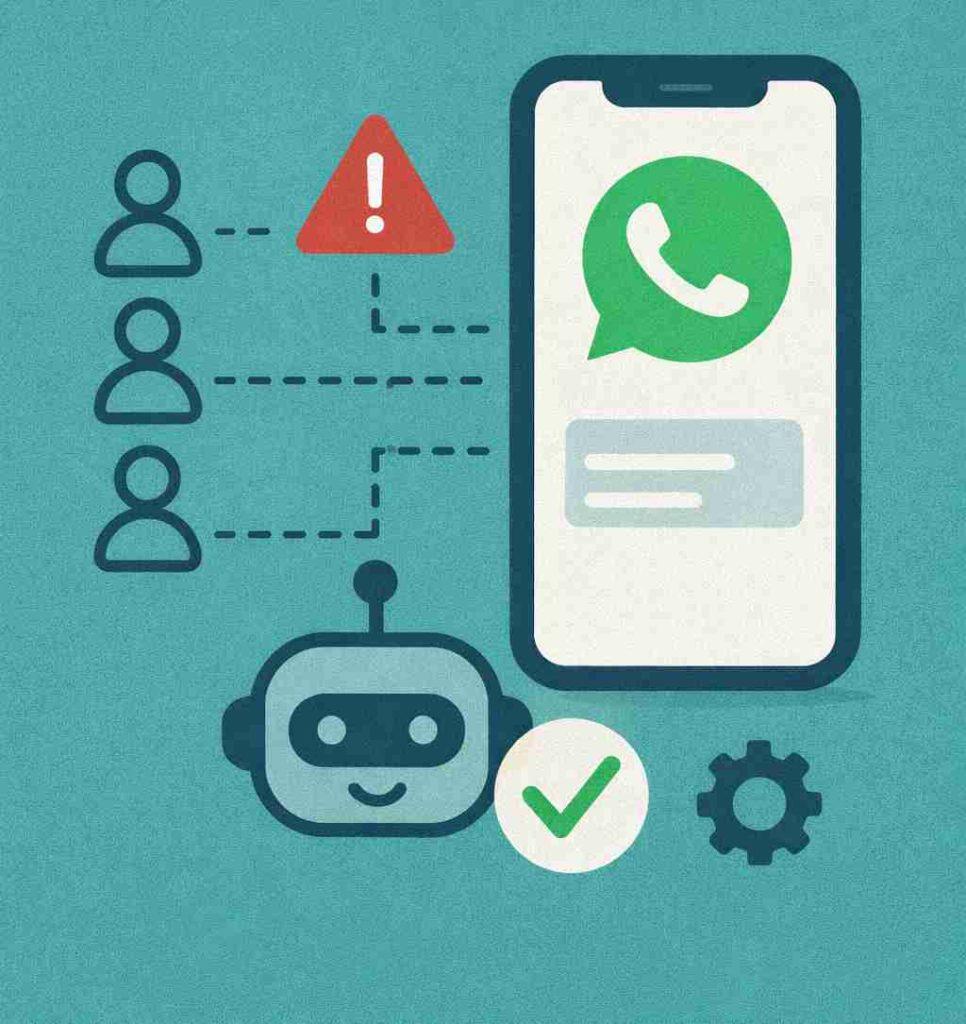
WhatsApp presents unique challenges. Its delivery is controlled by Meta’s platform rules. Also it relies heavily on the user’s device status.
Businesses are limited by WhatsApp’s platform rules. It includes strict daily caps on the number of unique customers a business can message. Additionally, all business-initiated outreach must use pre-approved templates. Delivery failures immediately occur if a business hits its message limit or tries to use an unapproved message format. If a business receives a high volume of negative user feedback, its quality rating drops. It leads to automatic delivery throttling and restrictions.
Delivery is highly dependent on the recipient’s phone. If a user’s phone is off or offline for more than 30 days, the message is permanently discarded by the WhatsApp server. Furthermore, even if the message arrives successfully on the device, delivery can be ineffective if the user has muted the business’s chat or activated device-level settings like Do Not Disturb (DND). It causes the critical message to be delivered silently and unseen.
SMS Gaps :
SMS, while reliable, faces specific challenges rooted in telecom infrastructure and regulation. Network failures are a constant threat. If a recipient’s phone is off or out of range for too long (past the carrier’s time limit), the message is permanently dropped. Additionally, Non-DND restrictions in many regions mean that if a message is incorrectly classified as promotional, it will be automatically blocked by the carrier or regulatory body.
Carriers also use sophisticated telecom filtering to protect users. Messages containing spam characteristics like suspicious links or excessive capitalization. It can be quietly blocked, often without the sender’s knowledge. Furthermore, during high-traffic periods, the network experiences delayed delivery during peak hours. This congestion can cause a critical, time-sensitive message (like an OTP) to be queued. It arrives minutes late and rendering it functionally useless to the customer.
Customer Gaps :
Delivery issues often arise from factors related to the user’s device or account, which the sender cannot control. Messages fail if the user’s device is not ready to receive them. For channels like WhatsApp and Push Notifications, the phone needs an active internet connection. If the phone is switched off or remains offline for an extended period, the message will eventually time out and be permanently dropped by the platform or the carrier. A user’s service status can also cause failures. Users with no credit on prepaid plans may be blocked from receiving even basic SMS texts. When a user is roaming or in a low-signal area, message delivery becomes unreliable. It is due to complex routing and connectivity challenges.
Hard delivery failures occur if the customer’s contact information is no longer valid. If a user has uninstalled your app, push notifications will hard-bounce. Similarly, if the number has been ported to a new carrier or has become inactive, any messaging attempt will result in a permanent delivery failure.
Why Single-Channel Strategies Fail Today?
Relying solely on one communication channel is no longer effective. It creates unacceptable risks and fails to meet modern customer demands.
A “WhatsApp Only” strategy offers excellent engagement but lacks reliability. Delivery is not guaranteed. The message requires the user to have an active app & internet connection, or it will eventually expire. Furthermore, if a business’s quality rating drops, Meta may silently block or throttle notifications. It means messages are lost without warning, undermining customer trust.
The “SMS Only” approach is highly accessible and network-dependent (reliable). But it severely limits the customer experience. SMS lacks the rich media, interactive buttons, and branded feel. The modern users expect conversational engagement and complex support. It is also an expensive and limited channel & unsuitable for multi-step journeys. It is still vulnerable to telecom filters and strict regulatory blocks (like DND).
The Power of a Blended Messaging Strategy :
A blended messaging strategy is the best way to overcome the failures of relying on a single channel. It allows businesses to reach customers across multiple channels (SMS, WhatsApp, Email, Push) simultaneously or sequentially. This maximizes overall reach. It also ensures the message content is delivered via the most appropriate & engaging medium.
The main strength of this approach is ensuring message delivery regardless of platform availability. This is done using Intelligent Channel Fallback, where the system automatically tries a secondary channel (like SMS) if the primary channel (like Push or WhatsApp) fails due to technical reasons or user device issues. This resilience guarantees that critical information reaches the customer.
By employing a blended strategy, businesses eliminate dependency on a single communication medium. This future-proofs the system against potential risks like sudden policy changes on a specific platform (e.g., WhatsApp restrictions) or carrier-level outages. This flexibility allows for better cost control and ensures continuous, reliable customer contact.

Introducing Botbuz SMS Marketing and SMS Fallback :
Botbuz is a comprehensive solution. It fixes the unreliability of modern customer communication, focusing heavily on robust SMS marketing and strategic channel redundancy. What makes Botbuz different is its Intelligent Routing and Fallback Engine. It doesn’t just manage channels but actively guarantees message success. Thus, automatically monitoring and executing pre-defined failover plans.
Botbuz specifically addresses the fragility of platforms like WhatsApp. If a crucial message fails to deliver on WhatsApp due to user status (like being offline) or platform limits (like a low-quality rating), Botbuz instantly triggers its SMS Fallback mechanism. This ensures that the essential, time-sensitive content is immediately sent via the highly reliable SMS channel.
The system uses Smart Routing to prioritize delivery success while optimizing costs. It attempts the preferred, often cheapest channel first (like WhatsApp). If that fails, it instantly and automatically routes the message to the next most reliable channel. Thus, guaranteeing that the customer receives the critical information despite any issues with a single platform or network.
SMS Fallback :
SMS Fallback is a crucial safety mechanism. It guarantees message delivery by setting up a sequential hierarchy for communication. It ensures that a message is only marked as a complete failure if every channel in the sequence has failed. The core of the system is the automated switch from a primary channel like WhatsApp to SMS upon detection of a delivery failure.
The transition from a failed WhatsApp message to an SMS is done in near real-time. If the system detects a failure code from the WhatsApp API (e.g., user offline for too long or account throttling), it instantly and automatically converts the message content and routes it through the highly reliable telecom network as an SMS.
The entire fallback process requires zero manual intervention. It is key for speed and reliability. This automated switch ensures that time-sensitive alerts, such as OTPs or fraud warnings, still arrive promptly via SMS. Thus, preserving a seamless customer experience and reinforcing brand trust. It also maintains cost efficiency by only paying for the one successful delivery.
Direct SMS Broadcast Campaigns :
SMS remains the most universally reliable and instantly read channel. It makes it ideal for high-volume, critical messaging.
SMS is used extensively for both marketing and security. For Bulk Promotions, its high open rates drive rapid traffic for flash sales & limited-time offers. For OTP & Authentication, it is the industry standard for delivering critical, near-instantaneous one-time passwords and payment verification codes securely.
SMS also handles Transactional Updates reliably. It provides customers with immediate order and shipping confirmations and essential account alerts. Also it reduces customer support needs. Finally, its Instant Broadcasting at Scale capability is unmatched. It allows the infrastructure to deliver millions of messages within minutes for large-scale, time-critical events. Thus, guaranteeing the broadest possible reach.
Stay Connected, No Matter the Channel :
Modern marketing and customer service demand multi-channel continuity. It means the customer experience must remain seamless even when one communication platform technically fails. Customers expect reliable communication, and any break in the journey—such as a missed confirmation—leads directly to frustration and churn.
Botbuz ensures the customer always receives the message by implementing a delivery-guaranteed operation. Through its Intelligent Routing and SMS Fallback system, Botbuz monitors delivery in real-time. If the primary channel (like WhatsApp or Push) fails due to technical or device issues, the system instantly and automatically switches the alert to a highly reliable channel, such as SMS, eliminating all delivery gaps.
Botbuz champions a delivery-first notification strategy. It places the successful reception of the critical message above all else. This focus on reliability builds customer trust and maximizes business outcomes. It ensures that essential messages like OTPs and transactional updates are never missed. Thus, successfully closing conversion and authentication loops.
Conclusion : Guarantee Your Connection with Botbuz
In today’s complex messaging environment, guaranteeing message delivery is mandatory, as failure directly costs revenue and trust. Traditional, single-channel strategies are too fragile to handle the modern demands of customer communication.
Botbuz SMS Marketing Solutions allow businesses to guarantee their messaging success. By using its Intelligent Routing and automatic SMS Fallback, Botbuz creates a resilient architecture. This system eliminates common delivery failures caused by network issues, platform restrictions, and device problems. Thus, ensuring that message is never lost.
By prioritizing a “delivery-first” strategy, Botbuz gives businesses the confidence of achieving a near 100% effective delivery rate. This crucial reliability secures every customer touchpoint. It ensures all critical communication is received. Thus, allowing business to successfully close sales & authentication journeys.