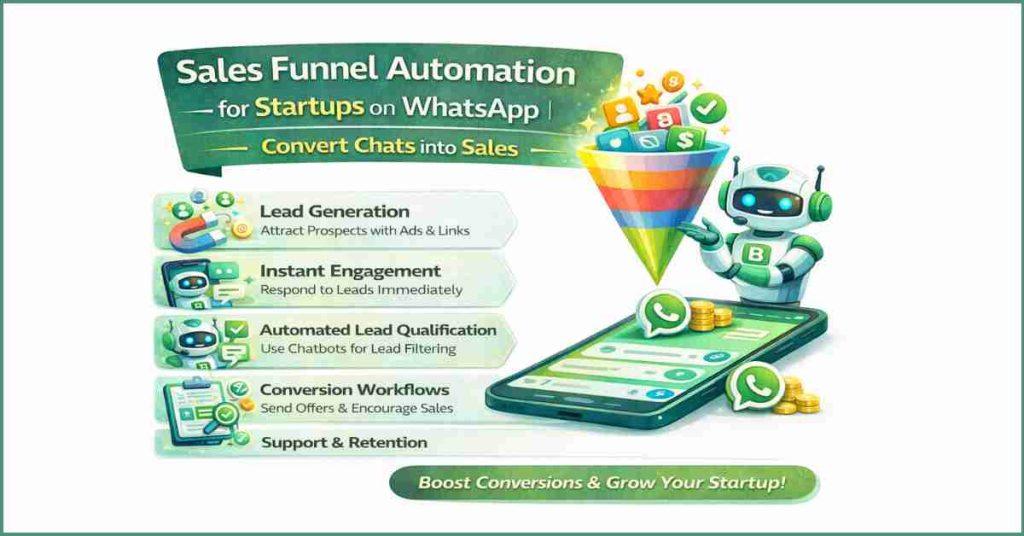
- WhatsApp becoming the Backbone of Start up Sales Automation :
- Why Start ups Need an Automated Sales Funnel on WhatsApp?
- Components of WhatsApp Sales Funnel Automation :
- Steps for Startups for an Automated Sales Funnel on WhatsApp :
- Comparison : WhatsApp Funnel vs. Traditional Funnel
- Automated Sales Funnels for Different Start up Types :
- Using Botbuz Chatbot in WhatsApp for Sales Funnel Automation in Startups :
WhatsApp becoming the Backbone of Start up Sales Automation :
WhatsApp is a game-changer for start ups. It replaces slow, traditional sales funnels with instant, two-way conversations. By meeting customers where they are already active, start ups bypass crowded email inboxes. It has a 98% open rate to close deals faster.
This shift toward “conversational commerce” allows small teams to scale rapidly through automation. AI-powered bots handle 24/7 lead qualification, FAQs, and even payments. It enables a startup to manage thousands of inquiries without increasing headcount. Essentially, WhatsApp turns the sales process into a friction-free dialogue. It builds immediate trust and significantly boosts conversion rates.
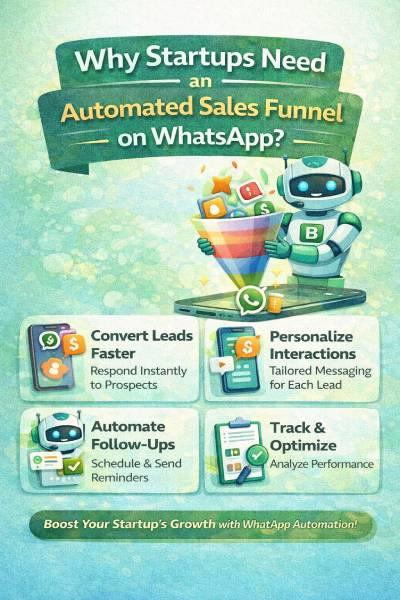
Why Start ups Need an Automated Sales Funnel on WhatsApp?
Startups use WhatsApp automation to overcome the limitations of small teams. It acts as a force multiplier that handles lead generation without constant manual work. By utilizing bots for instant engagement, startups satisfy the modern buyer’s demand for immediate responses. It boosts conversion rates compared to slow, traditional email follow-ups.
This “always-on” system ensures that the business stays open 24/7. It captures global leads and answers FAQs even when the founders are asleep. Ultimately, automation removes the risk of human error and follow-up fatigue. It ensures every potential customer is nurtured through a consistent, professional sequence until they are ready to buy.
Components of WhatsApp Sales Funnel Automation :
To build an automated WhatsApp sales engine, businesses need a few key building blocks. It turns a simple chat app into a professional business tool.
The Foundation : API and AI
It starts with the WhatsApp Business API, which is the “pro” version of the app. It allows your business to handle thousands of chats at once and connect to other software. On top of this, businesses can add AI Chatbots that act as 24/7 digital sales teams. It answers questions, showing product catalogues & qualifies leads so you don’t have to.
The Brains : CRM and Analytics
To stay organized, you connect WhatsApp to your CRM (like HubSpot or Zoho). This ensures every conversation is saved and your customer data is always up to date. Finally, you use Analytics to track what’s working. By seeing where people drop off or which messages get the most replies, businesses can constantly tweak the funnel to close more deals.
Components of Automated Sales Funnel :
To maximize growth, a startup’s WhatsApp funnel must be more than just a chat window. It needs to be a structured lifecycle that moves a stranger to a loyal advocate automatically.
The Full Lifecycle on WhatsApp
Unlike traditional marketing where you jump between different platforms (Ad → Landing Page → Email), the WhatsApp lifecycle is centralized. The entire journey—from first seeing an ad to receiving a shipping update—happens in a single, continuous chat thread. This builds a “conversation history” that makes the customer feel known and valued.
A WhatsApp funnel is a single-thread journey. It guides users from discovery to purchase. By breaking the funnel into stages—Gen, Engage, Qualify, Convert, and Retain—startups can automate the repetitive “middle” of the sales process. This alignment ensures that as the startup grows, the workload doesn’t overwhelm the team. But the customer experience remains instant and personal.
Steps for Startups for an Automated Sales Funnel on WhatsApp :
Building a WhatsApp funnel is about creating a seamless path. It is right from a stranger’s first click to a loyal customer’s repeat purchase. Here is how each stage works in simple terms.
Stage 1: Lead Generation
This is about removing the “roadblocks” between a customer and your business. Instead of sending people to a slow website where they might leave, businesses use Click-to-WhatsApp ads or QR codes to drop them directly into a chat. This “zero-friction” approach captures their contact info immediately, and by tagging them based on where they came from (like an Instagram ad vs. a website widget), businesses know exactly what they are looking for before the conversation even begins.
Stage 2: Instant Engagement
The moment a user joins the chat, automation takes over to ensure they aren’t left waiting. A bot sends a friendly welcome message. It sets expectations and captures basic details like their name or specific needs. By centralizing all messages from WhatsApp, Instagram, and Web into one inbox, your team sees a single, unified view of the customer, making the interaction feel personal rather than repetitive.
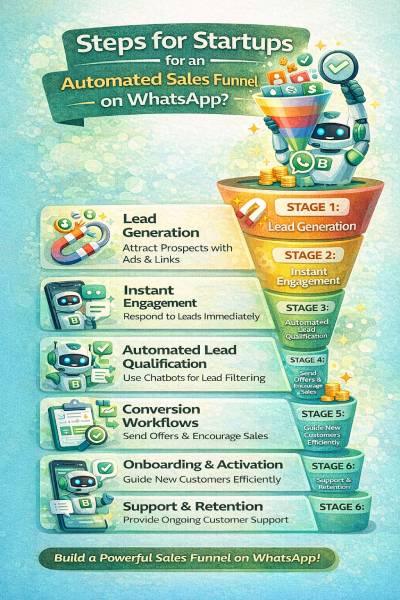
Stage 3: Automated Lead Qualification
Not every lead is ready to buy right away. Using tools like Botbuz, businesses can set up a “digital gatekeeper”. It asks the right questions—such as budget or timeline—to filter out the window shoppers. This process automatically routes “hot” leads to the sales team for a human touch. While exploratory leads are moved into a separate “nurture” flow to be educated over time.
Stage 4: Conversion Workflows
When a lead is close to buying but needs a final nudge, the funnel uses intelligent follow-ups. If they don’t respond on WhatsApp, the system can automatically send a “fallback” message via email or SMS to keep the deal alive. For high-ticket items where a chat isn’t enough, the system can even trigger a business call at the exact moment the lead shows high intent, ensuring you close the sale while the interest is at its peak.
Stage 5: Onboarding and Activation
Once the sale is closed, the automation focuses on making the customer successful. Businesses can deploy personalized onboarding journeys that send tutorial videos, checklists, or “quick start” guides directly through WhatsApp. By syncing this with CRM, the bot knows exactly which stage of the product setup the customer is in. Thus, helping them reach that “aha” moment faster without needing a manual support call.
Stage 6: Support and Retention
The final stage ensures the customer stays happy and comes back for more. Automated bots handle common support questions instantly. While proactive messages like renewal reminders or “thank you” notes keep the brand top-of-mind. Businesses can also use their past purchase data to send automated upsell offers. It suggests a perfect secondary product based on what they already bought. Thus, turning a one-time buyer into a repeat customer.
Comparison : WhatsApp Funnel vs. Traditional Funnel
|
Metric
|
Traditional (Email/Web)
|
WhatsApp (Automated)
|
|---|---|---|
|
Drop-off Rate
|
Drop-off Rate
|
Minimal (Instant Chat)
|
|
Response Time
|
Minutes to Hours
|
Real-time (AI Bot)
|
|
Lead Quality
|
Mixed (Manual cleanup)
|
High (Automated Triage)
|
|
Customer Experience
|
Linear & Static
|
Dynamic & Conversational
|
Automated Sales Funnels for Different Start up Types :
Every startup has a different goal. The WhatsApp funnel should be tailored to the specific “action” you want the user to take. Here is how the automation looks for three common start up models :
- B2B SaaS : High-Touch Automation
For SaaS startups, the goal is to move leads from “curious” to “confirmed user.” The funnel starts with automated demo booking. Instead of a back-and-forth email thread, a bot shares a calendar link directly in WhatsApp. After the demo, the bot handles qualification (asking about team size or tech stack) and then pivots to onboarding. It sends “how-to” videos and feature tips to ensure the user actually adopts the software.
- D2C Product : The 24/7 Digital Storefront
D2C startups focus on speed and volume. The funnel begins with product discovery, where users browse a WhatsApp Catalog and ask questions about sizing or shipping. Once they buy, automation handles the order confirmation and real-time delivery updates. To drive growth, the system sends automated “Refill” reminders or personalized discount codes. It is on the basis of their past purchases to turn one-time buyers into repeat customers.
- Marketplace or Service : The Connector
Marketplaces like home repairs or freelance platforms use WhatsApp. It helps to bridge the gap between two parties. The funnel starts with a service inquiry. It is where the bot gathers the user’s requirements. It then handles the matching and booking process, notifying the service provider and the customer simultaneously. After the job is done, the bot automatically reaches out for feedback and ratings. Thus, ensuring quality control and long-term retention.

Using Botbuz Chatbot in WhatsApp for Sales Funnel Automation in Startups :
Botbuz serves as a specialized “operating system” for startups. It bridges the gap between basic messaging & professional sales automation via the WhatsApp Business API. It replaces manual effort with a no-code chatbot. It captures lead data from the moment someone clicks an ad, ensuring no potential customer is ignored. By automating the qualification process, asking the right questions and tagging “hot” leads, Botbuz filters the noise so your small team only focuses on high-value deals.
Beyond just chatting, Botbuz turns WhatsApp into a revenue engine. It helps by integrating with CRMs and payment gateways. This allows businesses to manage thousands of conversations in a single team inbox, send bulk personalized broadcasts without risk, and even collect payments directly in the chat. For a growing startup, it provides the infrastructure to scale sales volume 10x without needing to increase business headcount.
Conclusion :
The future of startup sales is conversational, automated, and mobile-first. By moving a business funnel to WhatsApp and powering it with a smart chatbot, you aren’t just sending messages—you’re building a scalable, high-conversion relationship with every single customer. It is the most efficient way to ensure that as your lead volume explodes, your customer experience remains personal and your sales team stays focused on what they do best: closing the deal.