- The Rise of Conversational Marketing :
- What is Chatbot Marketing?
- Why Does Chatbot Marketing Matter ?
- How Chatbot Marketing Works Across Different Channels ?
- Types of Chatbots in Marketing :
- Implementing a Successful Chatbot Marketing Strategy :
- Take Your Chatbot Marketing to the Next Level with Botbuz :
The Rise of Conversational Marketing :
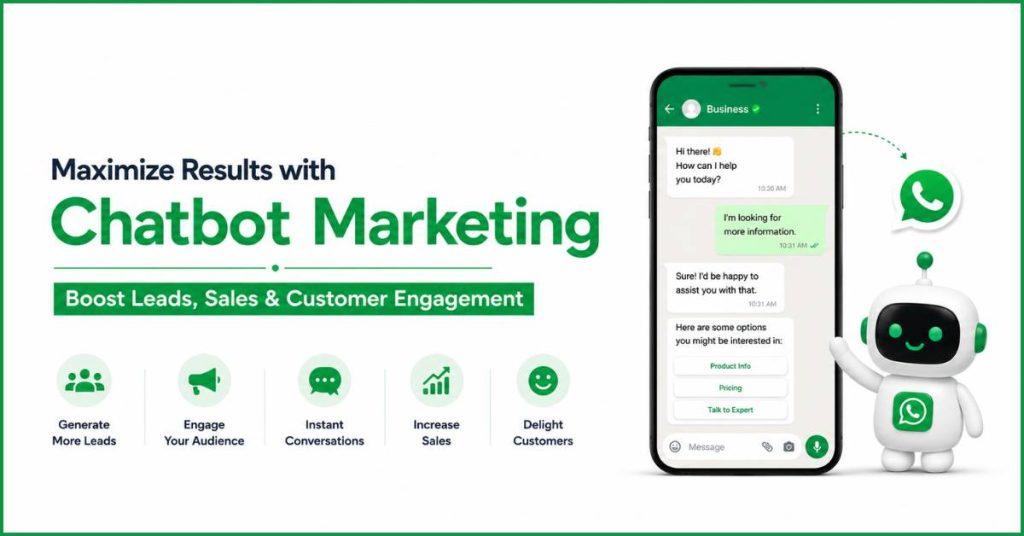
Imagine a chatbot as a friendly, virtual store assistant that never sleeps and is always ready to talk to you through a website or a messaging app. Chatbot marketing is simply when businesses use these automated computer programs to chat with customers, answer their questions right away, and help them buy things.
Since today’s shoppers hate waiting for answers, companies are rushing to use chatbots because they can talk to thousands of people at the same time, 24/7, without getting tired. Instead of making people fill out boring forms, these clever bots ask quick questions, figure out what a customer wants, and recommend the perfect product. It makes shopping feel like texting a helpful friend, which keeps customers happy and helps businesses make more sales faster than ever before.
What is Chatbot Marketing?
Chatbot marketing is a clever way businesses use automated, text-chatting computer programs to connect with people, answer their questions instantly, and turn curious visitors into paying customers. Instead of making you fill out long, boring forms or search through a crowded website, these smart bots talk to you directly on the apps you already use every day—like WhatsApp, Instagram, Facebook Messenger, and Telegram—or right on a company’s homepage.
The chatbot handles the repetitive stuff, like welcoming new users, asking quick questions to see what they need, and recommending the perfect product, almost like a tireless digital store assistant. By showing up wherever customers love to hang out and giving them answers in seconds, these bots help businesses stay connected 24/7 and sell things much faster without forcing people to wait around for a human to reply.
Why Does Chatbot Marketing Matter ?
Chatbot marketing matters because today’s shoppers expect instant answers and hate waiting around for a business to email them back. These clever computer programs fix that problem by working 24/7 without ever taking a break, greeting customers and answering questions instantly whether it’s lunchtime or midnight.
Instead of showing everyone the exact same boring webpage, a chatbot treats each customer like an individual by asking what they like and suggesting items just for them, much like a helpful store assistant. Best of all, it speeds up the entire shopping trip: rather than filling out a form, waiting days for a salesman to call, and finally buying an item, a customer can chat with the bot, find what they need, and complete their purchase all in a matter of seconds.
How Chatbot Marketing Works Across Different Channels ?
Chatbot marketing adapts its functionality based on the technical capabilities and user behaviors of each specific channel. Deploying an effective conversational strategy requires optimizing workflows to leverage the unique features of each platform.
Website
Website : based chatbots are deployed directly onto high-intent digital properties (such as landing pages, documentation hubs, or checkout screens).
Mechanics : They trigger based on user behaviours, such as scrolling depth, time spent on a page, or exit intent.
Primary Function : Website bots excel at capturing anonymous traffic, answering product or pricing FAQs right when friction occurs, and using calendar-scheduling integrations to book sales demos instantly before a prospect leaves the site.
Operating through the WhatsApp Business API, this channel offers a direct line to a user’s mobile lock screen, yielding open rates often exceeding 90%.
Mechanics: Brands use Meta-approved message templates to launch proactive promotional broadcasts, cart abandonment alerts, and utility notifications.
Primary Function: By utilizing interactive UI elements, WhatsApp bots simplify navigation. Instead of typing out long answers, users can simply tap a preset response or view an interactive menu.
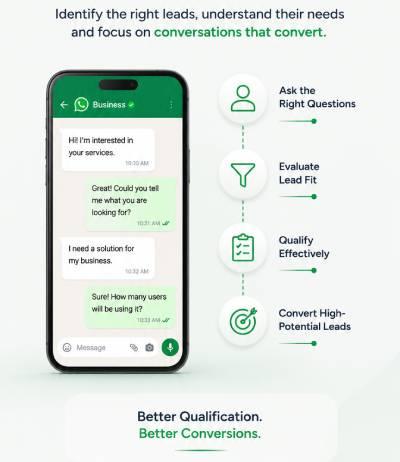
Key Features: As illustrated above, the platform supports List Messages (menus containing up to 10 structured options) and Reply Buttons (up to 3 quick-tap responses). This structured format streamlines user selection, reduces input errors, and accelerates conversational commerce by letting users browse native product catalogs and complete checkouts directly inside the thread.
Facebook Messenger
As one of the pioneers of structured social bots, Messenger remains highly integrated with Meta’s broader advertising ecosystem.
Mechanics: The channel is primarily fueled by Click-to-Messenger (CTM) ads. When a user clicks an ad on their Facebook feed, it opens a pre-configured Messenger chat instead of an external landing page.
Primary Function: The bot immediately initiates a qualification script, saving user data seamlessly. It leverages persistent menus and rich cards containing product images and deep links to move users smoothly from social discovery to lead entry.
Instagram DM automation has become a primary growth engine for e-commerce brands, retail businesses, and digital creators looking to monetize social engagement.
Mechanics: Bots are triggered by specific native actions: when a user leaves a chosen keyword in a post comment (e.g., commenting “LINK”), mentions the brand in a Story, or sends a direct message.
Primary Function: The bot instantly delivers the requested resource, product link, or discount code straight to the user’s private inbox. This turns public engagement into private conversational funnels, instantly capturing lead details without forcing users to leave the app.
Telegram
Telegram is heavily favored by tech-centric communities, web3 projects, crypto platforms, and massive broadcast networks due to its flexible API limits and open development options.
Mechanics: Telegram bots rely on highly customized text commands (such as /start or /help) and fully interactive inline keyboards that sit directly below messages.
Primary Function: They automate community management, handle large-scale user verification, run interactive quizzes, and deliver instantaneous content broadcasts to massive, unlimited channels or group chats.
Mobile Apps
In-app chatbots are built directly into a brand’s proprietary iOS or Android application via native SDKs (Software Development Kits).
Mechanics: They leverage deep access to the device’s OS and the logged-in user’s account profile.
Primary Function: These bots offer highly context-aware support and marketing interactions. They can pull transaction history, coordinate native push notifications to bring users back to the app, and resolve complex account issues inline, providing a smooth user experience that keeps customers engaged within the brand’s own digital ecosystem.
Types of Chatbots in Marketing :
1. Rule-Based Chatbots
Think of a rule-based chatbot like a digital “choose-your-own-adventure” book or a helpful touch-screen menu. It doesn’t actually understand unscripted typing; instead, it gives you a few specific buttons to click, like “Book an Appointment” or “See Store Hours.” If you click a button, it follows a strict, pre-made roadmap to give you a preset answer or collect simple information like your name and email. It is perfect for straightforward, repetitive tasks where the business wants to guide you down a specific path without any guessing games.
2. AI-Powered Chatbots
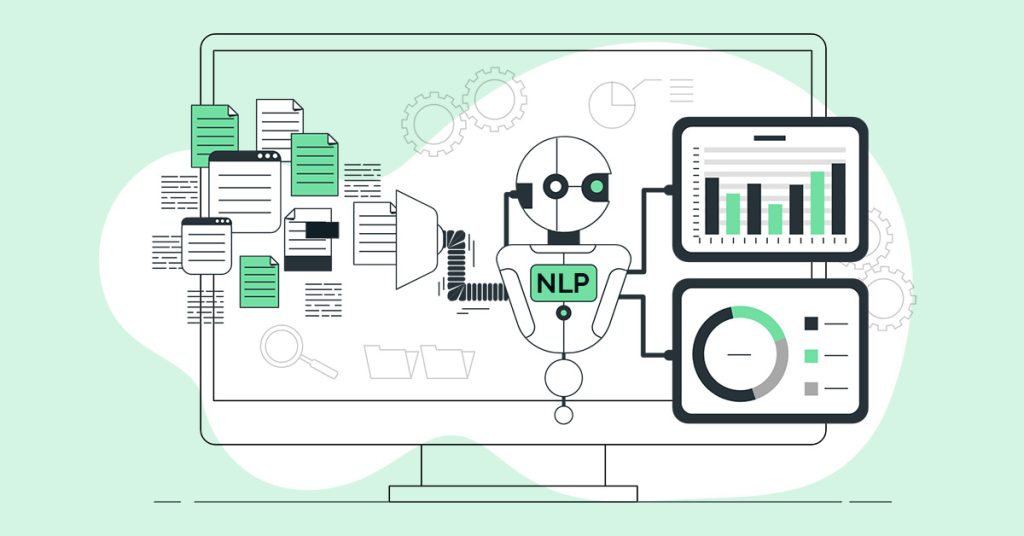
AI-powered chatbots are the geniuses of the digital world because they use smart technology called Natural Language Processing to actually understand what you mean when you type in your own words. You don’t have to click specific buttons or worry about perfect spelling; you can just type a question like a normal person, and the bot figures out your intent to give you a natural response. Even better, these bots memorize your preferences over time to give you personalized suggestions, and they actually get smarter with every single conversation they have.
3. Conversational Commerce Chatbots
A conversational commerce chatbot acts just like a friendly, personal shopping assistant inside your favorite messaging app. Instead of making you scroll through a massive online store, it asks you a few fun questions about your style or budget and shows you the exact products you are looking for. It can also text you a friendly reminder if you forget items in your shopping cart, track your packages, and even let you securely pay for your items right inside the chat window so you never have to leave the app to shop.
4. Social Media Chatbots
Social media chatbots are built to hang out exactly where you do—on apps like Instagram, WhatsApp, and Facebook Messenger. They are excellent at turning public social media fun into private conversations; for example, if you comment the word “DISCOUNT” on a brand’s Instagram video, this bot instantly drops a coupon code right into your private direct messages. It makes interacting with a brand super easy and fun, allowing businesses to gather leads and talk to thousands of followers at the exact moment they are looking at a post.
5. Customer Support Chatbots
Customer support chatbots are the ultimate 24/7 digital helpers that tackle everyday problems so you never have to wait on hold. They can instantly answer common questions about return policies, check the real-time shipping status of an order, or help you do simple tasks like resetting a lost password. If your problem is too complicated or you start getting frustrated, the bot is smart enough to create a support ticket and instantly hand the entire conversation over to a live human agent so you don’t have to repeat yourself.
Implementing a Successful Chatbot Marketing Strategy :
Planning Chatbot Objectives :
Before building a chatbot, a business needs to figure out exactly what they want the bot to do. It helps to give the chatbot a specific job description, like deciding whether its main goal is to find new customers, text people who left items in their shopping carts, or answer everyday tech support questions. Setting these clear goals ahead of time helps the company know exactly how to measure if their digital helper is doing a good job.
Selecting the Right Chatbot Platform :
Choosing a chatbot platform is like picking the right software tool for the job. Businesses can choose simple, drag-and-drop builders where they just connect boxes with arrows to make a social media bot, or they can use advanced AI frameworks that require computer programming to build a super smart bot that understands free-form typing. The choice depends on how much money the business has and whether they need a simple button-clicking assistant or a genius AI conversationalist.
Designing Conversation Flows :
Designing conversation flows is like writing a visual script for a “choose-your-own-adventure” game. The business maps out a flowchart showing exactly what the bot should say first and how it should respond to different customer choices. Good design means keeping the messages short and fun, using helpful reply buttons, and always having a backup plan so the bot never gets stuck in a loop if a customer says something completely unexpected.
Connecting with Business Systems :
To make a chatbot truly useful, a business has to link it up to their other computer programs, transforming it from a simple talker into a powerful worker. The bot connects to customer databases (CRMs) to instantly save a user’s contact information, hooks into email tools to send automatic follow-up messages, links to the WhatsApp Business API to text people’s phones, attaches to secure payment tools like Stripe to let people buy things right inside the chat, and uses tracking dashboards to show the company exactly where users are clicking or getting confused.
Training AI Chatbots :
Training an AI chatbot is a lot like teaching a puppy or helping a student learn a new language. You feed the bot hundreds of real examples of how people talk, teaching it to recognize what a customer actually wants even if they use different words or make spelling mistakes. Developers also write clever “fallback” safety scripts so that if the bot gets totally confused by a weird question, it can politely ask for clarification or offer helpful menu buttons instead of breaking down.
Launching and Monitoring Performance :
Launching a chatbot is a careful, step-by-step process that starts with a small test group before opening it up to the whole world. Once the bot goes live, team members must check the chat histories every day to see where customers are getting stuck, clicking away, or triggering errors. By constantly watching how the bot behaves in the real world, the business can tweak the scripts and fix the code to make sure the chatbot gets smarter and friendlier every single day.

Take Your Chatbot Marketing to the Next Level with Botbuz :
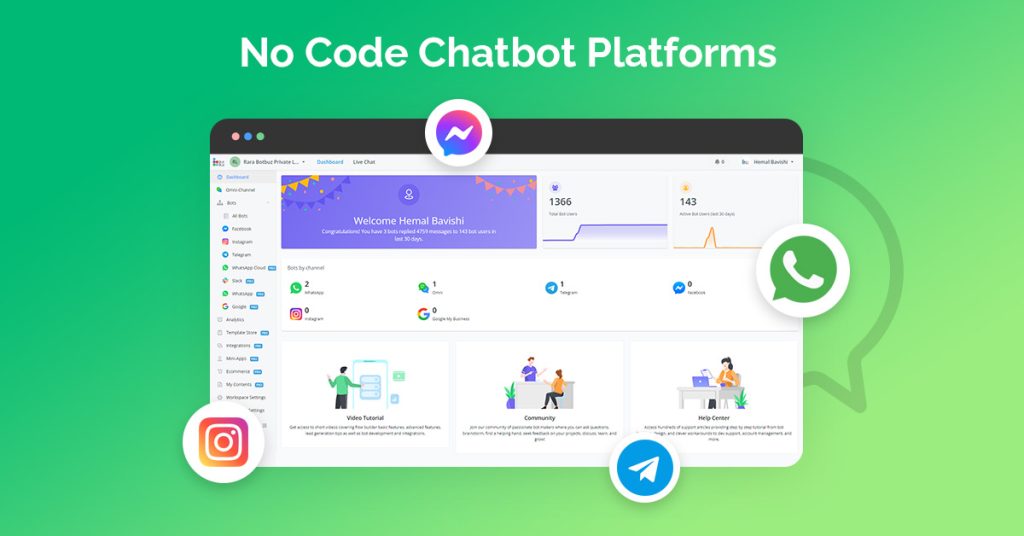
Botbuz unifies this entire strategy into one easy-to-use platform. It features a no-code, drag-and-drop builder so any business can create smart AI bots without needing software engineers. By connecting seamlessly to a company’s CRM, payment tools, and social channels, Botbuz handles leads, processes sales, and delivers 24/7 customer support on autopilot—helping businesses grow incredibly fast while keeping costs down.
Conclusion :
Chatbot marketing is now essential because today’s customers demand instant responses over slow forms and delayed emails. By using Botbuz, an all-in-one, no-code platform, you can easily launch smart automated chats across WhatsApp, Instagram, and your website to capture leads, process payments, and support users 24/7. Ultimately, the businesses that answer fastest win the market, and Botbuz is the easiest way to build that automated growth engine on autopilot.