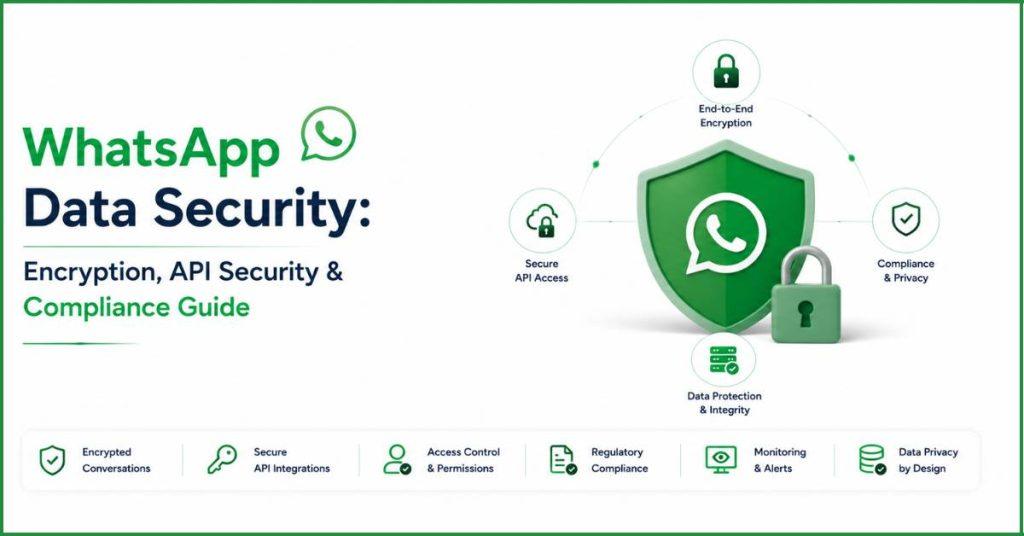
- Growing Importance of Secure Business Messaging :
- Why Data Security on WhatsApp Matters ?
- WhatsApp Data Security: Debunking Myths vs. Facts
- What is End-to-End Encryption (E2EE) in WhatsApp?
- How Does WhatsApp E2EE Work for Your Business?
- How WhatsApp Protects Chats and Data ?
- How WhatsApp Implements Security Beyond E2EE ?
- Where Does End-to-End Encryption Fall Short?
- Should Businesses Be Concerned About Encryption?
- Data Handling : WhatsApp Business API, WhatsApp Cloud API & MM API
- What are the Core WhatsApp Data Security Features of WhatsApp Business API?
- How to Protect WhatsApp Business Conversations with Botbuz?
Growing Importance of Secure Business Messaging :
When companies talk to customers on WhatsApp, keeping those messages safe is essential. Because people share sensitive details like phone numbers and order information, businesses must protect this data from hackers and spam to obey privacy laws and protect their reputation. WhatsApp keeps these chats safe by using end-to-end encryption. It means only the sender and receiver can read the messages and by verifying official business accounts so customers know who they are talking to. Ultimately, when a business respects customer privacy and uses a secure app, it builds strong, long-lasting trust.
Why Data Security on WhatsApp Matters ?
Keeping customer information safe on WhatsApp is vital for any company today. When people message a brand to buy things or ask for help, they often share personal details like phone numbers, addresses, and order information. If a business fails to protect this data, hackers can steal it through online scams. It can lead to huge fines and ruin the company’s reputation.
Luckily, WhatsApp protects these messages using end-to-end encryption. It acts like a secret code that only the sender and receiver can read. By using verified accounts and respecting customer privacy, businesses ensure that scammers cannot easily fake their identity. It helps everyday shoppers feel safe, protected & confident whenever they chat with a brand.
WhatsApp Data Security: Debunking Myths vs. Facts
Many people believe incorrect myths about how safe WhatsApp really is. But the truth is that it uses strong protection to keep conversations secure. A lot of people think WhatsApp workers can read private messages or that special business accounts are less safe. But in reality, all messages are locked with secret codes so that only the sender and the receiver can view them.
While WhatsApp protects the actual text messages, pictures, and calls while they travel across the internet, it does collect basic network information like phone numbers and sending times. Once a message arrives at a business, it becomes the company’s responsibility to store that information safely on their own computers and follow privacy laws so customer details never fall into the wrong hands.
What is End-to-End Encryption (E2EE) in WhatsApp?
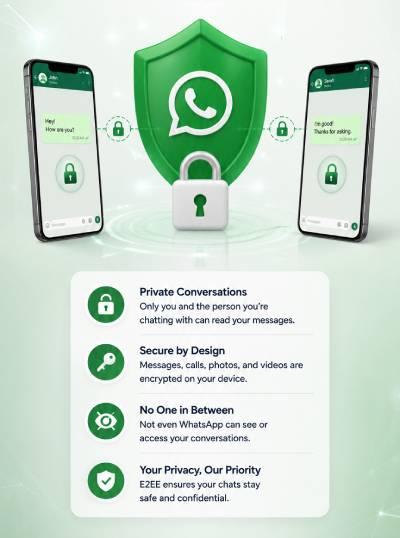
Many people believe incorrect myths about how safe WhatsApp really is. But the truth is that it uses strong protection to keep conversations secure. A lot of people think WhatsApp workers can read private messages or that special business accounts are less safe. But in reality, all messages are locked with secret codes so that only the sender and the receiver can view them.
While WhatsApp protects the actual text messages, pictures, and calls while they travel across the internet, it does collect basic network information like phone numbers and sending times. Once a message arrives at a business, it becomes the company’s responsibility to store that information safely on their own computers and follow privacy laws so customer details never fall into the wrong hands.
How Does WhatsApp E2EE Work for Your Business?
WhatsApp uses end-to-end encryption. It helps to scramble messages into a secret code before they leave a user’s device. It ensures nobody, not even WhatsApp, can read them in transit. For small businesses, these messages unlock directly on their phones. While larger companies using the WhatsApp API unlock them on secure server systems to connect with customer service software. Once delivered and unlocked, the business is responsible for storing that information safely on its own systems.
How WhatsApp Protects Chats and Data ?
WhatsApp keeps chats and personal information safe. It uses a powerful set of security tools that work together like digital bodyguards. Every message, photo, and call is automatically turned into a secret code that only the sender and receiver can unlock. It prevents anyone else including hackers or WhatsApp itself from seeing the content.
To prevent unauthorized account access, WhatsApp requires biometric scans or personal PIN numbers when linking new devices or setting up a phone, while smart anti-spam systems continuously track suspicious behavior to block scammers and phishing attacks before they can harm users. Together, these protective layers ensure that personal communications stay private. It makes sure media transfers remain secure & users keep complete control over their accounts.
How WhatsApp Implements Security Beyond E2EE ?
Beyond secret message codes, WhatsApp protects its users using smart technology. It acts like a digital security system for accounts. To stop hackers from taking over profiles, WhatsApp uses biometric logins like fingerprints or facial scans. It sends instant alerts when a new device tries to log in. Also it checks to ensure the app hasn’t been modified or installed on a compromised phone.
Since WhatsApp cannot read private messages, it relies on artificial intelligence to monitor suspicious behavior such as accounts sending thousands of messages at once or links leading to dangerous websites and automatically blocks spammers before they cause harm. Additionally, when users link computers or tablets, WhatsApp locks each device with its own set of keys and automatically logs them out after two weeks of inactivity. Thus, keeping account access secure across all screens.
Where Does End-to-End Encryption Fall Short?
Even though end-to-end encryption scrambles messages while they travel across the internet, it cannot protect information from every possible security threat. For instance, encryption does not hide basic details like phone numbers, location, or timestamps. It can still show who is talking to whom and when. Additionally, if a hacker installs malware on a person’s phone, if someone leaves their device unlocked, or if a user accidentally backs up unencrypted chats to cloud storage, strangers can still view those private conversations. Encryption also cannot stop people from making human mistakes, such as falling for online scams, using weak account passwords, or taking screenshots of secret messages to share with others.
Should Businesses Be Concerned About Encryption?
WhatsApp’s secret codes safely deliver messages to a company. Businesses still need to be careful about what happens once those messages arrive. Encryption acts like a super-secure delivery truck. It protects packages on the road, but once the delivery reaches the warehouse, it is up to the business to lock the front door.
Companies are fully responsible for deciding which employees can see customer conversations, storing sensitive information safely on protected computers. It makes sure they follow privacy laws. If a business leaves its internal customer records unprotected or lets unauthorized staff access private chats, hackers can still steal customer data regardless of how safe WhatsApp’s delivery system was.
Data Handling : WhatsApp Business API, WhatsApp Cloud API & MM API
The WhatsApp Business Platform allows large organizations to connect customer chats directly to their internal software and automated tools. When a person sends a message to a business, it stays encrypted until it reaches a special gateway server—either run privately by the business or managed securely in Meta’s cloud infrastructure. This gateway translates the encrypted text into a format that customer service dashboards and chatbots can easily read.
Meta only holds onto these messages on its delivery servers until they are received or up to 30 days if undelivered. It means the business is the true owner of its chat records. Because of this, the company must handle data responsibly. They need customer permission to send outbound texts. It must protect their software access keys, and are tasked with safely storing all customer conversations within their own systems.
What are the Core WhatsApp Data Security Features of WhatsApp Business API?
The WhatsApp Business API uses a series of digital security checkpoints. It helps to protect company communications and keep customer information safe. Before any software can connect to the platform, it must verify its identity using secret passwords called API tokens. While strict permission settings ensure that employees only see the specific tools and chats they need for their jobs.
Every time messages move between Meta and a company’s private server, they travel through secure web links with digital signatures attached. It helps to confirm that the information is real and hasn’t been tampered with along the way. To prevent misuse, Meta keeps detailed records of system changes. It sets speed limits on how fast messages can be sent to block spam, and verifies that every business is a real, legitimate company before letting them send messages to customers.
How to Protect WhatsApp Business Conversations with Botbuz?
Botbuz helps companies manage their WhatsApp Business accounts safely. It acts as a secure control center for team members and automated chatbots. Instead of giving everyone full access, it uses strict permission rules for customer service agents. They can only see the specific chats assigned to them. Thus, preventing employees from stealing or leaking private customer lists.
The platform connects directly to Meta’s servers using secure, encrypted channels. It helps to make sure messages and customer data remain protected when moving into company databases. Additionally, Botbuz keeps detailed records of every action taken on the system. It automatically handles customer unsubscribe requests, and forces companies to follow safety guidelines such as using two-factor logins and limiting who can export data, so private information stays safe at all times.
Conclusion :
Keeping customer conversations safe on WhatsApp requires looking beyond transport encryption. It helps to protect data at every step. While WhatsApp scrambles messages during transit, companies remain fully accountable for how that information is handled once it arrives in their internal systems. By using the official WhatsApp Business Platform alongside a secure management tool like Botbuz, organizations can enforce strict team permissions. It safely routes messages into databases, and complies with privacy regulations. Ultimately, combining robust platform APIs with smart access controls allows businesses to deliver fast, automated customer service while maintaining complete data protection.