- WhatsApp a Powerful Marketing Channel for Businesses :
- What WhatsApp Marketing Really Means ?
- Is WhatsApp Marketing Legal for Businesses?
- WhatsApp Marketing Compliance : Rules to Follow
- Legal vs Illegal WhatsApp Marketing : Common Scenarios
- What the Future Holds for WhatsApp Marketing in India :
- Using Botbuz for WhatsApp Marketing :
- FAQs :
WhatsApp a Powerful Marketing Channel for Businesses :
WhatsApp has evolved from a simple messaging app into a global marketplace. Because people are fatigued by overflowing email inboxes and social media ads, businesses have moved to where users actually spend their time. It’s the ultimate “high-attention” channel because a notification there feels personal & urgent. It leads to engagement rates that traditional marketing just can’t touch.
However, the “wild west” era of messaging is over. While it’s a legal goldmine for sales, the laws and WhatsApp’s own rules are now incredibly strict. It helps to prevent it from becoming a spam folder. The key to staying legal and profitable is permission. As long as a customer explicitly says “yes” to being contacted, businesses can use the platform to handle everything from initial discovery to the final payment in one seamless thread.
What WhatsApp Marketing Really Means ?
Essentially, WhatsApp marketing is permission-based conversation, not digital shouting. It’s the difference between a friend texting you a recommendation (messaging) and a telemarketer calling you at dinner (spamming). It’s a high-utility tool that handles everything from “Where is my order?” to “Check out these new shoes,” all while keeping the user in control.
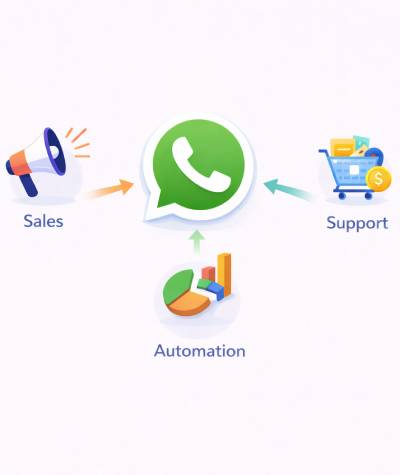
Unlike email, which can sit unread for days, or SMS, which feels dated and text-heavy. WhatsApp is interactive and visual. It’s a specialized ecosystem where businesses move from a promotional offer to a support question & to a final payment. It is all within the same chat bubble. It works because it respects the user’s space. Thus, providing a level of convenience that older channels simply can’t match.
Is WhatsApp Marketing Legal for Businesses?
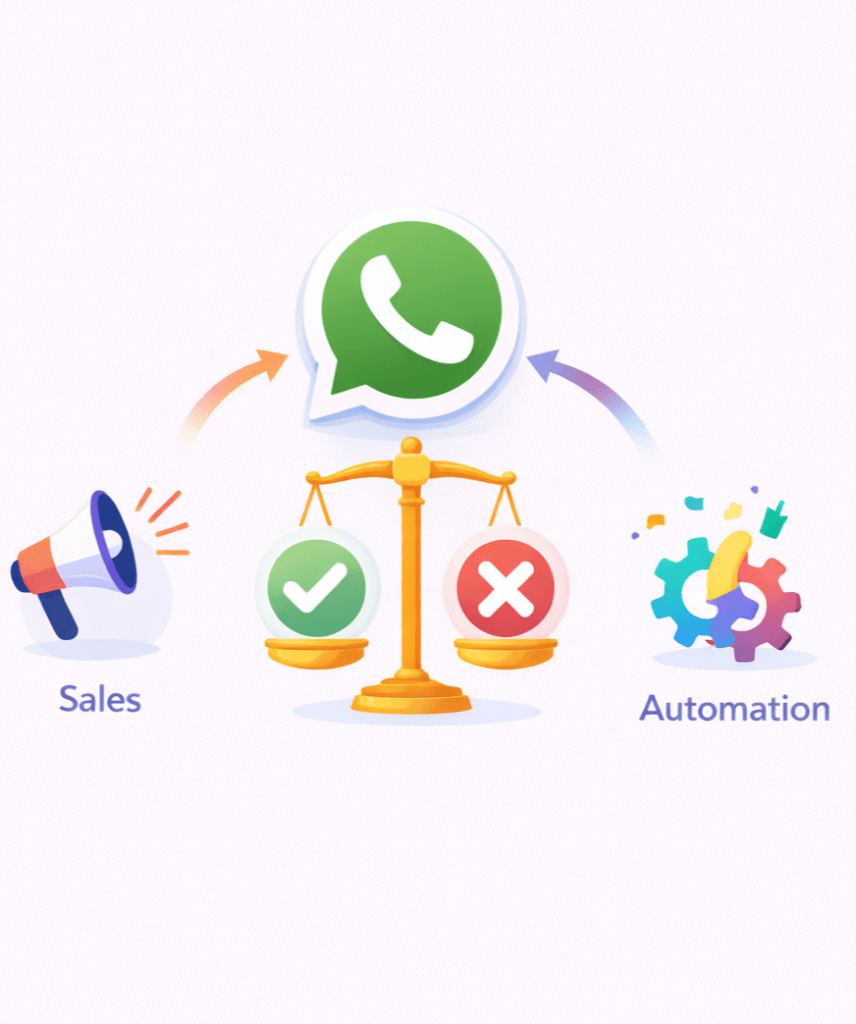
The legality of WhatsApp marketing hinges entirely on explicit consent and the use of official channels. It is a fully legitimate business practice when a brand uses the authorized WhatsApp Business API. It helps to engage with customers who have clearly opted in. Under India’s DPDP Act, businesses are legally required to treat phone numbers as protected personal data. It means “cold-blasting” strangers is no longer just bad manners, it’s a regulatory risk.
The platform distinguishes between professional marketing and illegal spam. It enforces template approvals and monitoring “user block” rates. While traditional SMS is often ignored, WhatsApp operates as a “permission-only” zone where the law protects the user’s right to privacy. Ultimately, as long as a company respects the “Stop” button and keeps a clear record of user agreement, they are operating safely within both Meta’s policies & Indian law.
WhatsApp Marketing Compliance : Rules to Follow
Explicit opt-in :
A business must treat explicit opt-in as its legal foundation. It isn’t enough to simply have a customer’s phone number. The individual must have taken a clear, recorded action like checking a box or scanning a QR code. It helps to welcome the brand into their private chat space. This makes purchased lists not just ineffective, but a direct violation of modern privacy laws.
Official WhatsApp Tools :
To remain compliant, a company must rely exclusively on official WhatsApp tools, such as the Business App or the API. While unauthorized “bulk sender” tools might seem tempting for their low cost, they lack the required security protocols and often trigger Meta’s automated ban systems. Using the official API ensures that all business data remains encrypted and professionally managed.
24-hour session rule :
The platform operates on a strict 24-hour session rule. It helps to prevent businesses from overstaying their welcome. During this window, a brand can chat freely with a customer who reached out first; however, once that window closes, they must use pre-approved templates for any further contact. This system ensures that every message is categorized correctly, whether it’s a helpful utility update or a promotional offer.
Guardian of data :
Under current Indian regulations, a business acts as a guardian of data. They are responsible for ensuring that customer numbers are stored securely and used ethically. This means a brand cannot collect a number for a delivery update and then “pivot” to sending marketing ads without separate consent. Thus, maintaining a high standard of data integrity & encryption throughout the process.
Total control :
A trustworthy brand always gives the user total control. Every marketing message should ideally include a clear “Unsubscribe” or “Stop” button. By making it easy for users to opt out, a business actually protects its own reputation and account health, ensuring its “Quality Rating” stays high and its messages continue to reach those who truly want to see them.
Be Respectful of Their Time :
Being respectful of time means treating your customer’s WhatsApp inbox like a living room, not a billboard. Respecting boundaries like not messaging late at night or on holidays is no longer just “nice to do”; it’s a survival strategy. If you overstay your welcome or message too often, the user’s “Report” button is only two taps away. The most successful brands are the ones that message less but make every message count.
Legal vs Illegal WhatsApp Marketing : Common Scenarios
- Legal Examples: The “Safe Harbor”
In a legal setting, a business operates with complete transparency. A brand might send a real-time order update or a personalized discount code to a customer who specifically checked a box on their website to “Opt-in via WhatsApp.” Because these messages are expected and useful, they stay within the “Green Zone.” Additionally, when a customer reaches out first to ask a question, the business can respond freely, fulfilling its role as a helpful support channel without violating any privacy boundaries.
- Illegal Examples: The “Danger Zone”
An illegal operation ignores the concept of personal space. This looks like a company buying a list of phone numbers and “cold-messaging” people who have never heard of the brand. In 2026, using unauthorized “scrapers” or bulk-sender tools which bypass official security layers is a major violation. Under India’s DPDP Act, these actions are no longer just annoying; they are treated as unauthorized data processing, leaving the business open to massive government fines and permanent account bans by Meta.
- Grey Areas: The “Caution Zone”
The grey area consists of practices that are technically legal but carry high risk. For instance, a brand might message a customer who opted in three years ago but hasn’t interacted since; while consent technically exists, the user likely won’t remember giving it, leading to a “Report & Block.” Another grey area is cross-selling, using a number collected for a “Flight Booking” to send “Insurance Ads.” To stay safe, third-party experts recommend “re-permissioning” old contacts and ensuring that every message offers a clear, immediate way for the user to say “No more.”
What the Future Holds for WhatsApp Marketing in India :
The future of WhatsApp in India is about complete integration. It’s no longer just a way to send ads; it’s a fully-fledged storefront where AI does the heavy lifting. The most successful Indian brands treat WhatsApp as their most valuable “real estate,” using it to guide a customer from the first “Hello” to the final payment without ever asking them to switch apps. Compliance isn’t a hurdle here, it’s the foundation that ensures this high-trust environment remains profitable.

Using Botbuz for WhatsApp Marketing :
Botbuz acts as an essential “command center” for businesses looking to scale on WhatsApp without the technical complexity of direct API coding. As an official Meta Business Partner, it provides a user-friendly, no-code platform that allows multiple team members to manage a single business number through a Shared Team Inbox, ensuring seamless collaboration & faster response times.
Conclusion :
By integrating AI-powered chatbots and e-commerce tools, Botbuz enables brands to automate lead qualification, recover abandoned carts & even process UPI payments directly within the chat. Ultimately, the platform ensures that businesses stay 100% compliant with WhatsApp’s strict 2026 policies by managing official message templates and opt-in records, transforming a simple messaging app into a secure & professional growth engine.
FAQs :
- Is WhatsApp marketing legal in India in 2026?
Yes. It is fully legal under the DPDP Act (2023) and TRAI guidelines, provided you have explicit consent (opt-in) from the customer. Sending unsolicited “cold” messages is illegal and carries fines up to ₹25,000 per violation.
- Can I use my personal WhatsApp app for business marketing?
No. Using a personal or standard Business App for bulk marketing violates Meta’s terms. In 2026, Meta uses AI to instantly detect and ban personal accounts performing automated or bulk outreach. Professional marketing requires the official API.
- How does Botbuz help me stay compliant with the DPDP Act?
Botbuz acts as your compliance shield. It automatically logs user “opt-ins” with timestamps (a legal requirement) and includes mandatory “Unsubscribe” buttons in every message. If a user opts out, Botbuz blacklists them instantly to prevent illegal re-contacting.
- What is the “24-Hour Window” and how does it work?
It is a “Customer Service Window” that opens when a user messages you. For 24 hours, you can reply with free-form messages for free or at a low cost. Once it closes, you must use a paid, Meta-approved Template Message to restart the conversation.
- Are there specific industries banned from WhatsApp marketing?
Yes. Meta’s Commerce Policy strictly prohibits sectors like gambling, adult content, tobacco, alcohol, and prescription drugs. Botbuz vets your business during the setup process to ensure your industry is permitted before you invest in a campaign.
- Do I need to verify my business with Meta to use Botbuz?
Highly recommended. While you can send limited messages without it, Meta Business Verification (using your GST/PAN) is required to unlock higher messaging tiers (10k to 100k+ daily) and to apply for the “Green Tick” verified badge.
- What happens if my “Quality Rating” drops?
If users “Report” or “Block” you, your rating turns Yellow or Red. This causes Meta to throttle your sending limits or pause your templates. Botbuz helps maintain a Green rating by segmenting your audience so you only message people likely to engage.