- WhatsApp as a High Engagement Communication Channel :
- What Is Audience Segmentation in WhatsApp?
- Why Is Segmentation Non-Negotiable for WhatsApp Broadcasts?
- Types of Segmentation You Can Use for WhatsApp Broadcasts :
- Tools Needed to Run Segment-Based WhatsApp Broadcasts :
- How to Run a Successful WhatsApp Broadcast with Botbuz ?
- Best Practices for WhatsApp Broadcasts With Segmentation :
- FAQs :
WhatsApp as a High Engagement Communication Channel :
WhatsApp is unique because it’s highly personal, leading to exceptional engagement (often over 90% open rates). However, this intimacy means users have high expectations. When a business sends a message, it needs to feel valuable, not intrusive.
Sending the same “one-size-fits-all” broadcast to your entire contact list quickly leads to failure. Generic messages are irrelevant to most recipients. It results in high block rates, frustrated users, and wasted advertising spend. They damage your sender reputation.
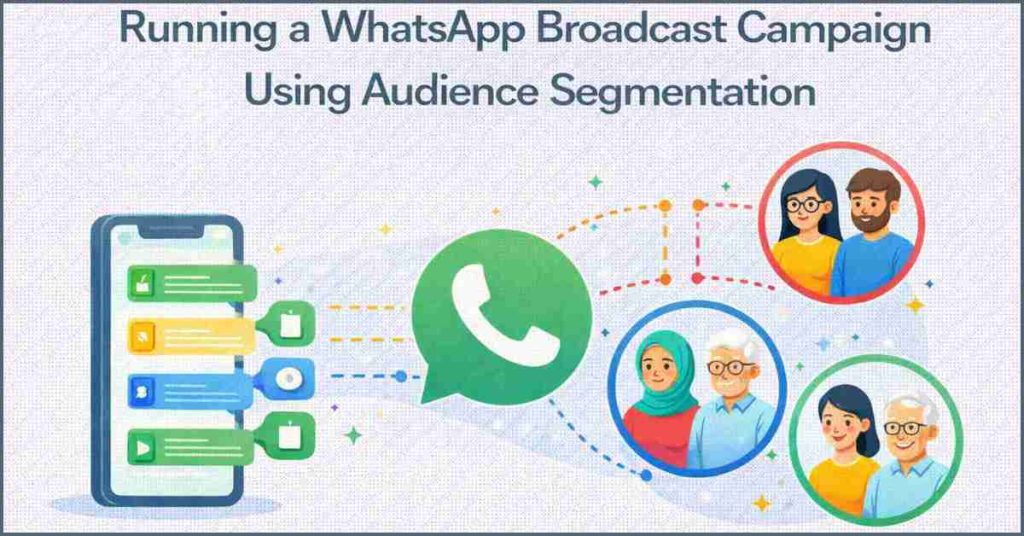
Segmentation solves this by grouping contacts based on shared characteristics. For e.g., purchase history, location, interests. This allows users to personalize content, ensuring users only receive offers and updates that are genuinely relevant to them.
Sophisticated segmentation relies on the WhatsApp Business API. The API integrates with business data like CRM. It enables to scale up broadcasts and automatically send personalized, timely messages to the right segments. Thus, ensuring maximum efficiency and impact.
What Is Audience Segmentation in WhatsApp?
Audience Segmentation is the process of dividing a full list of WhatsApp contacts into smaller, focused groups. It is on the basis of shared characteristics like purchase history, location, or interests. The main goal is to send highly relevant and targeted messages. It helps to boost engagement and conversions.
This process goes far beyond simple contact grouping. Segmentation uses real-time, dynamic data from business systems like your CRM. It helps to create detailed, often automated, segments. For example, a segment might be “High-value customers who clicked on the last two promotion links.”
To achieve this scale and precision, the standard WhatsApp Business App is insufficient. The WhatsApp Business API (WABA) is required. It allows the integration of customer data from existing software. Also it removes the 256-contact limit. Thus, automating the sending of personalized messages based on specific segment triggers.
Why Is Segmentation Non-Negotiable for WhatsApp Broadcasts?
- Identify Slipping/Inactive Users
You can’t let valuable customers drift away unnoticed. Segmentation helps you identify contacts who haven’t engaged in a while (e.g., 30, 60, or 90 days). By isolating these inactive users, businesses can send them specific, personalized reactivation offers or “We miss you” messages. This keeps your brand top-of-mind and helps recover potential lost revenue.
- Nurture Learners / Communities
WhatsApp isn’t just for sales; it’s great for building trust. Use segmentation to group customers who have shown interest in specific topics or products. Instead of selling, broadcast valuable educational content, tips, or product guides to these niche groups. This strategy positions the brand as a helpful expert, boosting long-term loyalty and retention.
- Re-Engage Consumers After a Long Silence
Some customers go completely dormant for many months. Segmentation allows you to pull this specific group out. Business can then send them a dedicated, high-value “comeback” incentive. It is like a deep discount or an exclusive preview, tailored to their past purchases. This is crucial for systematically recovering customers you might otherwise lose forever.
- Build Better Consumer Journeys
Not all customers are in the same stage of buying. Segmentation helps to map the user journey from new lead to loyal buyer. It helps to deliver the right message at the right time. For instance, new leads get introductory content, while loyal customers get VIP offers. This prevents sending an irrelevant pitch. Also it makes communication more effective across the entire sales funnel.
- Avoid Being Pushy
Sending endless, irrelevant promotions is the fastest way to get blocked on WhatsApp. Segmentation ensures that content aligns exactly with what the user is interested in. By targeting messages precisely, businesses can reduce message fatigue and avoid spammy behavior. Thus, it protects brand reputation and maintains high message deliverability.
- Act Based on Consumer Action
The most powerful form of segmentation is acting instantly on user behavior. If a user adds an item to their cart and leaves, business can immediately trigger a segmented “Abandoned Cart” reminder. Grouping users based on specific actions (clicks, visits, purchases) allows them to send highly contextual, just-in-time broadcasts. Thus, leading to significantly higher click-through and conversion rates.
Types of Segmentation You Can Use for WhatsApp Broadcasts :
- Demographic Segmentation
This is the process of grouping customers based on fundamental personal attributes such as age, gender, location, and profession. It’s the simplest form of segmentation. For WhatsApp, it’s most useful for geotargeting promotions like events specific to a city. It ensures product visuals are appropriate for the age or gender of the recipient.
- Behavioral Segmentation
This method groups customers based on their direct actions & interactions with your brand. Key criteria include their past purchases, browsing history, and engagement with specific products or content. This is powerful because it targets users based on intent. For example, you can send an immediate abandoned cart reminder or an upsell offer for a complementary item after a purchase.
- Interest-Based Segmentation
This segmentation focuses on the customer’s stated or inferred passions and preferences. If a customer consistently engages with content about cooking, travel, or fitness, business segment them accordingly. This allows them to share highly relevant content, news, or specialized promotions that align with their niche interests, drastically improving relevance.
- Customer Journey Segmentation
This organizes customers based on their current stage in the sales or relationship funnel with your company. Segments include new leads, active customers, dormant customers, and VIP customers. Using this ensures you send the right type of communication—like an introductory guide to a new lead, or a loyalty reward to a VIP—at the appropriate moment in their journey.
- RFM Segmentation (Recency, Frequency, Monetary Value)
RFM is a powerful analytical technique that scores customers based on how recently they purchased, how frequently they purchase, and the total monetary value they spend. This method pinpoints most valuable customers (high RFM score) and your at-risk customers (low R score). It enables businesses to reward high-value clients and specifically target the lapsed customers with reactivation campaigns.
Tools Needed to Run Segment-Based WhatsApp Broadcasts :
- WhatsApp Business API (WABA)
The WABA is the foundational platform. It allows businesses to operate WhatsApp at scale.
Unlike the basic WhatsApp Business App, the API removes limitations on broadcast size. It allows you to send proactive, non-customer-initiated messages (called “Template Messages”). It provides the infrastructure needed to integrate with external systems like CRMs. Thus, enabling to receive & act on rich customer data required for complex segmentation.
- CRM Integration (Customer Relationship Management)
A business CRM system is where all valuable customer data resides. It is the fuel for segmentation.
A direct, real-time connection between your CRM and your messaging platform is essential. The CRM holds data on past purchases, lifetime value, loyalty status & demographic details. The integration allows your messaging platform to automatically pull and update segmentation criteria. For example, when a customer’s status changes from “lead” to “active buyer” in the CRM, the WhatsApp segment is instantly updated.
- Chatbot Automation Platforms (like Botbuz)
Botbuz is Official WhatsApp Business Solution Providers (BSPs). They are the software layer that manages the broadcasts and segments.
They provide a user-friendly interface to manage and execute API-level actions without needing to write code. They handle the actual broadcast scheduling, template management, and segment application. They allow you to define rules. For e.g., “send this template only to customers with Tag X”. It often includes built-in analytics to measure segment performance.
- Tagging, Filtering, and Customer Profiling Features
These are the operational features within the automation platform or CRM that make the segmentation actionable.
Data needs to be organized into usable criteria. Tagging allows you to manually or automatically label users. For e.g., VIP, Shoes-Buyer, Refunded. Filtering allows the creation of specific segments by combining multiple tags and data points. For e.g., VIP AND Shoes-Buyer. These features are the actual mechanism used to create dynamic, highly granular segments that the broadcast platform can target instantly.

How to Run a Successful WhatsApp Broadcast with Botbuz ?
- Import and Organize Your Audience
You first need to feed the system the data required for segmentation. This is achieved by auto-syncing contacts from CRM, e-commerce platforms, or other databases. Crucially, businesses must then add tags, attributes, and labels to each contact. For e.g., VIP, Last_Purchase_Date, Interested_in_Shoes. This rich organization is the foundation of all segment-based targeting.
- Build Segments in One Click
This step is where the organized data becomes actionable. Instead of manually picking contacts, the platform uses the imported tags and attributes. It helps to build dynamic segments. Businesses can define rules to segment by activity (clicked a link), purchase behavior (spent over $100), demographics (located in Mumbai), or funnel stage (new lead). This allows you to target precise groups instantly.
- Create Rich and Personalized Broadcast Messages
A segment needs a tailored message. Business must move beyond plain text by using images, videos, buttons & catalogs to maximize engagement. More importantly, businesses use custom variables (placeholders) to personalize the message with data unique to the segment. It includes the recipient’s name, city, or the item from their last purchase. Thus, making the broadcast feel like a one-on-one message.
- Set Rules for Nurture, Winback & Retargeting
The power of an automation platform is the ability to schedule and trigger campaigns based on rules. Businesses can set up automated journeys that send a specific message flow when a user meets a criteria. It includes a “winback” campaign that automatically triggers for customers inactive for 90 days, or a retargeting message sent immediately after an abandoned cart.
- Analyze Real-Time Performance
The final, critical step is measurement. After sending, businesses must track key metrics like delivery rates, read rates, clicks & conversion rates for each segment. Analyzing this real-time data tells which offers and segments perform best. It allows optimizing future campaigns by refining segmentation rules & message content for better ROI.
Best Practices for WhatsApp Broadcasts With Segmentation :
- Keep Messages Short and Direct
Since WhatsApp is an immediate, conversational platform, your broadcasts shouldn’t look like emails. The message needs to be concise and get straight to the point. State the Call-to-Action (CTA) clearly in the first few lines, and avoid sending long, dense walls of text. By keeping it short, businesses ensure the user actually reads the entire message and acts on it quickly. Thus, maximizing engagement rate.
- Use Customer Names and Personalized Offers
Leverage your segmentation data to make the message feel individual, not mass-produced. Always insert the customer’s name and use custom variables to reference their specific history. It means mentioning the category they browse or a recent item they abandoned. This deep personalization drastically increases the message’s relevance and value. Thus, leading directly to higher click-through and conversion rates.
- Segment Lists Regularly
Customer behavior is constantly evolving. So segments must be dynamic and frequently updated. Businesses need a system to automatically move customers between segments as their status changes. For e.g., from an ‘Inactive’ segment to an ‘Active Buyer’ segment after they make a new purchase. Keeping segments fresh ensures messages are always timely and relevant to the customer’s current relationship with the brand.
- Respect Customer Communication Preferences
To maintain trust on a personal platform, you must honor user choices. Provide a clear and easy way for users to opt-out of promotional messages. Furthermore, use segmentation to control message frequency. Setting a cap like two per week per segment to prevent message fatigue. It reduces the risk of users blocking your number.
- Maintain Compliance with WhatsApp Policies
Adhering to WhatsApp’s rules is critical to keeping your messaging access. You must use only pre-approved message templates for all broadcast communications. Closely monitor sender quality rating. A high number of blocks and reports is a direct signal that segmentation is poor. It could lead to penalties, restrictions, or a permanent ban.
Conclusion :
Ultimately, the success of any WhatsApp broadcast campaign hinges on moving beyond mass messaging. It must embrace intelligent audience segmentation. By adhering to the core best practices—keeping messages brief, ensuring hyper-personalization, continuously updating segment definitions, respecting communication limits, and maintaining strict compliance—businesses transform a simple broadcast into a highly effective, one-to-one communication channel.
Using a dedicated platform like Botbuz makes implementing these practices straightforward and scalable. Botbuz automates the dynamic segmentation process. It allows users to instantly classify users. It is on the basis of real-time behavior, purchase history & engagement level.
This automation ensures that the right message, a VIP offer, a cart reminder, or a winback discount reaches the right customer at the optimal time. This is all done while managing opt-outs and utilizing pre-approved message templates. Thus, maintaining a healthy quality rating. Segmentation is the strategy. Botbuz is an indispensable tool. It makes WhatsApp campaigns a primary driver of engagement & conversion.
FAQs :
Q1. How do I send rich media WhatsApp Broadcast Campaigns?
You can send images, videos, buttons, catalogs, PDFs, and CTA templates. It can be done with WhatsApp Business API platforms like Botbuz. The platform allows you to upload media, personalize templates, and send them in one click.
Q2. How much time does it take for a WhatsApp Broadcast message to get delivered to users?
Delivery is almost instant. It is usually within seconds to a few minutes. It mostly depends on the volume and WhatsApp’s messaging rate limits.
Q3. What happens if I send a Broadcast to users above my messaging limit?
Messages beyond your limit will not be delivered. You may need to upgrade your tier, improve quality rating, or request higher messaging limits. It is through your WhatsApp Business API provider (like Botbuz).