- The growing Role of AI in WhatsApp Customer Conversations :
- What Is a WhatsApp Chatbot?
- What Is a WhatsApp AI Agent?
- WhatsApp Chatbot vs AI Agent: Side-by-Side Comparison
- How a WhatsApp Chatbot vs AI Agent Handles the Same Message :
- The Three Levels of WhatsApp Automation :
- What Makes an AI Agent Different?
- How to Build a WhatsApp AI Agent With Botbuz :
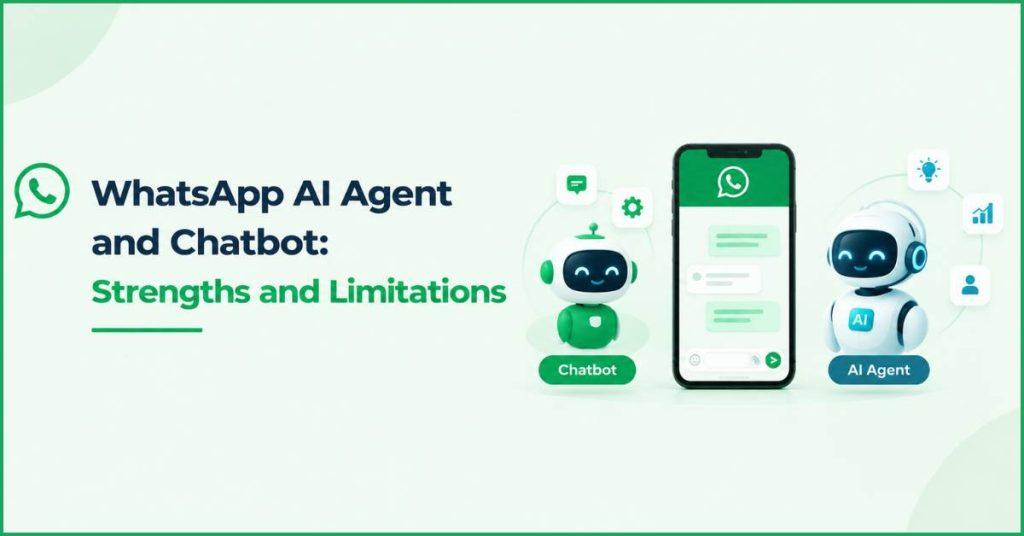
The growing Role of AI in WhatsApp Customer Conversations :
Imagine running a business & need to answer thousands of questions from customers every day. In the past, companies used basic WhatsApp chatbots. It acted like simple decision trees. These old bots could only answer if a customer clicked exact buttons or typed specific keywords. If anyone made a typo or asked a unique question, the bot would get confused and fail.
Today, businesses are upgrading to smart AI agents. They can actually understand normal human conversation. Instead of just following a rigid script, these AI agents work like helpful virtual assistants. It can check order details, update customer files, and solve complex problems on their own. This guide helps companies compare these two options. They can choose the best system to keep their customers happy and save time.
What Is a WhatsApp Chatbot?
A WhatsApp chatbot is a basic computer program. It sends automated replies using a simple list of pre-set rules. It works like a digital decision tree, showing users a menu with buttons or numbers to click, such as selecting an option to view store hours or type in an order number. Because it relies strictly on pre-written responses. It cannot understand regular conversational text or typos. It will get stuck if someone asks something off-script. However, this simple tool is perfect for businesses. It only needs to answer repetitive, everyday questions, share simple website links, or follow strict rules without spending a lot of money on advanced technology.
What Is a WhatsApp AI Agent?
A WhatsApp AI Agent is an advanced virtual assistant. It is powered by artificial intelligence that chats with people on WhatsApp like a real human would. Unlike basic chatbots that rely on simple button menus, this AI tool can read normal text. It can spot intent, understand slang, and even handle messy typos without getting confused. It also remembers what was said earlier in the chat, so customers never have to repeat themselves. Best of all, because it connects directly to a company’s internal databases and business tools, it can look up live order statuses. It answers complex questions, schedules meetings & solves unique customer problems all on its own.
WhatsApp Chatbot vs AI Agent: Side-by-Side Comparison
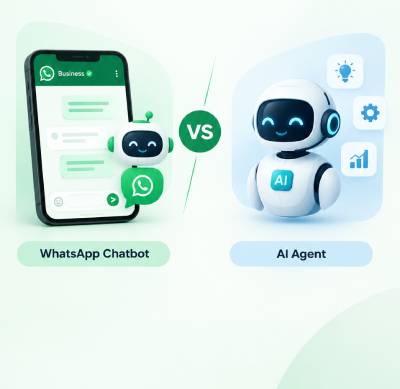
When comparing WhatsApp chatbots & AI agents, the main difference comes down to intelligence & flexibility. Traditional chatbots act like simple online forms. It follows strict rules, using basic menus to answer predictable questions like store hours. But they get stuck when a user makes a typo or asks something off-script.
On the other hand, AI agents use advanced language technology. It helps to understand natural conversation, slang & complex questions in over a hundred languages. They remember past details in a conversation, connect directly to real-time company tools to check inventory or process sales. It smartly passes tricky problems to human support when needed. Ultimately, simple chatbots work best for basic, repeated tasks. While smart AI agents are ideal for businesses that want to handle detailed sales, personalized support, and multi-step tasks automatically.
How a WhatsApp Chatbot vs AI Agent Handles the Same Message :
When a customer sends a message with multiple questions, traditional chatbots and AI agents handle it completely differently. A traditional chatbot gets confused by long, detailed messages. It is because it only looks for basic keywords, forcing the customer to start over and click through rigid menu options that often lead to frustrating dead ends. In contrast, a smart AI agent reads the whole message like a human. It understands every part of the request at once. Also connects directly to store databases to solve the problem immediately. This turns what would be a slow, annoying customer support experience into a quick, smooth conversation that gets the user exact answers right away.
The WhatsApp AI Agent Response :
An AI Agent processes customer communication. It treats every incoming message as an action oriented goal rather than a simple string of text. Instead of relying on rigid keyword lists, the AI Agent uses NLP and LLM. It helps to handle complex, real-world customer requests through a five-stage operational framework.
Understanding Customer Intent
The agent parses unstructured natural language to determine the user’s primary goal. For e.g., wanting to exchange an item, schedule a service, or inquire about pricing. It accurately processes typos, colloquialisms, and regional slang.
Identifying Multiple Requirements in One Message
Unlike traditional systems that handle only one prompt at a time, the agent deconstructs multi-part messages into distinct sub-tasks. For example, if a user asks to return an item, check local stock, and confirm store hours in a single text, the agent isolates all three requirements simultaneously.
Using Conversation History and Business Information
The agent references previous chat turns so the customer never has to repeat information. It simultaneously queries internal business infrastructure such as CRMs, inventory systems, or knowledge bases via Retrieval Augmented Generation (RAG). It helps to fetch real-time, accurate data.
Giving a Contextual Response
Instead of outputting rigid, pre-scripted templates, the agent synthesizes the retrieved data into a clear, personalized reply. It addresses every part of the user’s inquiry in a single, natural message.
Taking the Next Appropriate Action
The agent actively executes operational tasks rather than just delivering information. It can update CRM records, hold inventory & issue calendar invites. Also it hands off high-priority issues to a live human representative when specific escalation rules are met.
What Actually Changed?
The shift from traditional messaging bots to modern AI represents a massive leap in how computers talk to people. In the past, automated systems were limited to rigid, pre-scripted paths and simple keyword matching. It means they could only give basic answers if users clicked the right buttons.
Today, modern AI systems understand actual human intent and natural conversation. It allows users to talk freely, make typos, or change subjects without breaking the flow. Most importantly, automation has transformed from simply answering questions to actively completing tasks. It can be like booking appointments or updating customer files. Also it reaches out proactively to help users before they even ask.
The Three Levels of WhatsApp Automation :
WhatsApp automation can be understood in three distinct levels. It moves from basic rule-based tools to highly intelligent digital assistants.
At Level 1, traditional chatbots act like simple interactive menus. It forces users to click preset buttons or type specific numbers to answer predictable questions like store hours.
At Level 2, AI chatbots use natural language processing. It helps to understand normal, open-ended questions and typos. Thus, allowing them to pull accurate answers directly from company documents and FAQs.
At Level 3, advanced AI agents go beyond just talking. They use complex reasoning and connect directly to internal business systems. It helps to perform real-world tasks automatically such as updating customer records. Thus, checking real-time stock, or booking appointments.
Ultimately, lower levels work well for simple, repetitive questions. While higher level AI agents give businesses the power to handle complex customer support and sales workflows entirely on their own.
What Makes an AI Agent Different?
An AI agent is much smarter than a regular chatbot. It is because it focuses on completing goals rather than just spouting back static text messages. It remembers the whole conversation so users never have to repeat themselves. It uses real company information to make smart, helpful decisions on the fly.
Instead of just sending links or pointing to a website, the AI agent can actually use outside business tools to do real work. It is like checking real-time store inventory, updating customer profiles, or scheduling appointments. It can also personalize every chat based on who it is talking to. If a problem gets too complicated or emotional, it smoothly hands the conversation over to a real human worker. Ultimately, what truly sets an AI agent apart is that it moves from simply answering questions to actively getting tasks done.

How to Build a WhatsApp AI Agent With Botbuz :
Building a WhatsApp AI agent using the Botbuz platform is a simple process. It transforms a basic messaging account into a smart digital worker. First, a business connects its official WhatsApp Business account to Botbuz. It sets up an AI model to power the agent. Next, the business uploads its company files, website links, and FAQs so the AI can learn its specific product details and policies.
Once trained, team members give the AI a clear role. It can act as a helpful sales assistant. Also it sets rules for scoring new leads & links the agent directly to business systems like Shopify or CRMs. It can check inventory or process orders automatically. Finally, after setting up safety rules to hand off tricky chats to human workers, the business tests the AI in a simulator. It helps to fix any bugs before launching it to live customers & track its performance over time.
Conclusion :
Ultimately, choosing between a traditional WhatsApp chatbot and a modern AI agent comes down to whether a business needs simple answers or real action. Basic chatbots are great for guided menus and routine questions. AI agents provide a much smarter, conversational experience. It can solve complex problems on the spot.
By using platforms like Botbuz, businesses can easily set up these intelligent agents. It helps to connect with their official WhatsApp accounts & learn from company documents. It automatically handles tasks like booking appointments or updating customer files. In the end, upgrading to an AI agent through Botbuz transforms WhatsApp from a simple messaging app into a 24/7 digital assistant. It helps businesses grow and keeps customers happy.