- Finding the Right WhatsApp Campaign Frequency :
- Why Does WhatsApp Campaign Frequency Affect More Than Just Engagement ?
- Is There an Ideal WhatsApp Campaign Frequency?
- Factors That Determine How Often You Should Send WhatsApp Campaigns :
- Recommended WhatsApp Campaign Frequency by Business Type :
- How Often Should You Send WhatsApp Campaigns by Audience Segment?
- Signs You're Sending Too Many WhatsApp Campaigns :
- Signs You Should Increase Campaign Frequency :
- What is the Best Time to Send a WhatsApp Campaign?
- How Botbuz WhatsApp Chatbot Helps Manage Campaign Frequency ?
- How Botbuz Campaign Calendar Helps You Stay Within the Right Frequency :
Finding the Right WhatsApp Campaign Frequency :
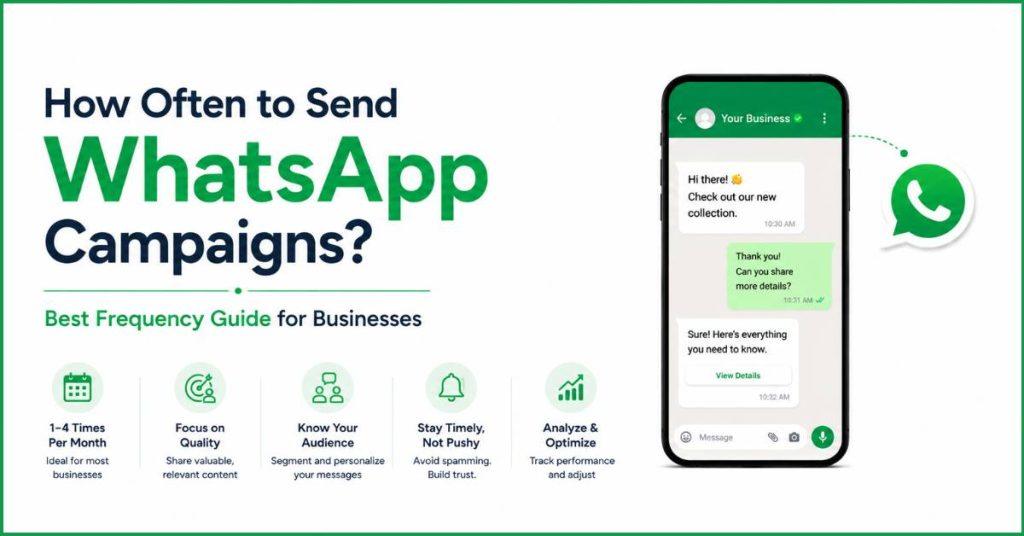
Imagine having a direct hotline to a friend’s phone where your message pops up right on their lock screen. That is what WhatsApp marketing is like for businesses. But it requires a careful balancing act. If a company messages its customers too much, it becomes annoying, like a friend who won’t stop texting and people will simply block them.
On the other hand, if a company rarely sends messages, customers will forget they ever signed up in the first place. Finding the perfect balance is tough. It is because businesses often mistake quick opens for actual interest, or they treat WhatsApp like email, which people don’t mind ignoring. When a business gets the timing just right, they build real trust. It keeps their customers happy & naturally makes more sales without overstaying their welcome.
Why Does WhatsApp Campaign Frequency Affect More than Just Engagement ?
When a company sends messages on WhatsApp, it does way more than just get people to open a chat. It actually shapes how customers feel about the brand. Think of it like a friend who only texts when they have something genuinely cool to share versus one who pings your phone constantly during class time. The constant texter quickly gets muted or blocked because they are interrupting your day.
On WhatsApp, blocking is incredibly easy. If too many people block a business, Meta, the company that owns WhatsApp will actually punish them. They will shut down their account. However, if a business sticks to a predictable schedule and only sends messages when it really matters, customers learn to trust them. It keeps their notifications turned on, and gladly look forward to what the company has to say.
Is there an Ideal WhatsApp Campaign Frequency?
When it comes to deciding exactly how many WhatsApp messages a business should send, there is no magic number that works for everyone. Because WhatsApp feels so personal. The perfect schedule depends entirely on who the customer is and what kind of business is messaging them. For instance, a clothing brand might send a couple of texts a week about a big clothing sale. But an insurance company would completely annoy people if they messaged that often.
To find the right balance, smart businesses don’t treat everyone the same. They send updates based on how much a customer actually interacts with them. It makes sure every message has a clear purpose. In the end, the secret is to always pay attention to the data. It can be like checking if people are clicking links or hitting the block button and always giving them an easy way to opt out if they want to leave.
Factors that Determine How Often You Should Send WhatsApp Campaigns :
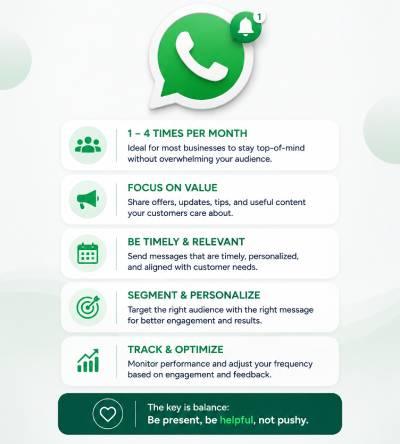
How often a company should text on WhatsApp depends on four main things. 1) their industry 2) the type of customer 3) what the customer likes 4) the goal of the message. For example, a clothing store can send two or three texts a week about cool outfits. But a doctor’s office or a bank should only text for important things like appointment reminders or security alerts so they don’t annoy people.
It also matters how often a person buys things. A superfan who buys every week will love getting early access to sales. While someone who only shops during the holidays will get annoyed if they are messaged all year long. Ultimately, smart companies watch how people behave. It is like checking if they are actually opening the texts or clicking the block button and they make sure to change their habits so every message feels like a helpful note instead of annoying spam.
Recommended WhatsApp Campaign Frequency by Business Type :
|
Business Type
|
Recommended Frequency
|
Primary Message Focus
|
|---|---|---|
|
E-commerce Stores
|
1–3 times per week
|
Flash sales, abandoned carts, personalized product drops.
|
|
Retail Businesses
|
1–2 times per week
|
In-store events, weekend promotions, loyalty rewards.
|
|
Restaurants & Cafés
|
2–3 times per week
|
Weekend specials, happy hour deals, lunch menus.
|
|
Healthcare Providers
|
As needed (Transactional only)
|
Appointment reminders, prescription alerts, health tips (monthly).
|
|
Educational Institutes
|
1–2 times per week (Lifecycle dependent)
|
Admissions updates, deadline alerts, course announcements.
|
|
Real Estate Agencies
|
1 time per week
|
New property listings, open house invites, market insights.
|
|
Travel Agencies
|
1–2 times per month
|
Seasonal holiday packages, flash flight deals, early-bird perks.
|
|
Financial Services
|
Monthly (Promotional) / Instant (Utility)
|
Fraud alerts, statement notifications, monthly financial tips.
|
How Often Should You Send WhatsApp Campaigns by Audience Segment?
Instead of treating every customer the exact same way, smart businesses divide their WhatsApp lists into three different groups. It is on the basis of how active they are. For brand-new sign-ups, companies start off super slowly. It is done by sending just one or two friendly welcome messages in the first week. It helps to build trust before they ever try to sell anything. For active contacts, the superfans who constantly open messages and love buying things, businesses can safely text two or three times a week with cool product updates, helpful tips, or weekend discount codes.
Finally, for dormant contacts who haven’t opened a message in a long time, trying to sell them something right away is a huge mistake that usually gets the company blocked; instead, businesses reach out gently just once every few weeks with a helpful tip or a simple question asking if they even want to stay on the list, only bringing them back to the regular schedule after they show real interest again.
Signs You're Sending Too Many WhatsApp Campaigns :
When a company floods people with too many WhatsApp messages, several clear warning signs pop up to show they are totally overdoing it. First, the business will notice that their results take a nosedive. Fewer people actually open the texts, replies dry up, and they stop making money from their campaigns. Even worse, annoyed customers will start fighting back by quietly muting the chat notifications, opting out, or clicking the block button. WhatsApp tracks these blocks very closely. If a company gets reported too many times, Meta will flag their account and can even shut down their texting privileges entirely.
Signs You Should Increase Campaign Frequency :
On the flip side, there are times when a business is actually being too quiet, and their own customers leave behind clues showing they want to hear from them more often. When a company looks at its data and sees incredibly high open rates, lots of quick text replies, and strong click-through rates—meaning people are constantly clicking the links inside the chat. It is a clear green light that the audience is highly engaged.
Customers might even give glowing feedback or make frequent repeat purchases. It is right after a message is sent, proving they find the updates genuinely useful. In these cases, increasing the campaign frequency slightly isn’t seen as spam. Instead, it satisfies a hungry audience that is excited and ready to see more of what the brand has to offer.
What is the Best Time to Send a WhatsApp Campaign?
Finding the perfect time to send a WhatsApp message is all about catching people when they are already relaxing and looking at their phones. The best days to send these updates are usually in the middle of the week like Tuesday, Wednesday, and Thursday. It is because Mondays are too hectic and by Friday everyone is already thinking about the weekend.
During those days, the sweet spots are in the morning right as the day starts. During the afternoon break, or in the evening when people are finally winding down. Of course, because every group of customers behaves a little differently, smart companies don’t just guess. They test out different hours and check their data to see exactly when their specific audience is most likely to text back.

How Botbuz WhatsApp Chatbot Helps Manage Campaign Frequency ?
To keep from annoying people on WhatsApp, a company can use a smart tool like Botbuz. It helps to perfectly manage how often they text. Instead of blasting the exact same message to everyone at once, Botbuz splits the contact list into smaller groups. It is on the basis of what each person likes, making sure people only get texts they actually care about.
It automatically schedules messages to go out at the absolute best times of day, customizes them with the customer’s name so they feel friendly, and runs automated journeys—like sending a quick reminder if someone forgets an item in their online shopping cart. Best of all, it gives businesses a detailed scoreboard. It shows exactly how many people are opening links or clicking the block button. Thus, allowing them to instantly tweak their broadcast habits before anyone gets tired of hearing from them.
How Botbuz Campaign Calendar Helps You Stay Within the Right Frequency :
The Botbuz campaign calendar acts like a master planner. It helps businesses organize their texts so they never accidentally flood their customers’ phones. Instead of scrambling to send messages at the last second, companies can map out their entire weekly or monthly schedule way in advance. Thus, keeping their communication perfectly steady and balanced.
The calendar makes it easy to set up different texting speeds for different groups. It is like sending a few fun updates a week to superfans while leaving quieter customers alone. It can even run repeating messages entirely on autopilot to save time. Best of all, it keeps a close eye on the digital scoreboard by tracking how people react. Thus, giving businesses the exact clues they need to tweak their timing and fix their habits before anyone gets annoyed.
Conclusion :
Ultimately, finding the perfect rhythm for WhatsApp campaigns is all about balancing being helpful without being annoying. If a company texts too much, people will block them, but if they text too rarely, everyone will forget who they are. Because every audience and industry behaves differently. So, managing this balance by hand is practically impossible as a business grows.
That is why using a smart tool like Botbuz is a total game-changer. It takes away the guesswork by using an automated calendar to group customers by what they like, space out messages perfectly, and track real time results. By letting automation handle the timing, businesses can stop stressing over the math and focus on building a loyal crowd that actually gets excited every time their phone buzzes.